Sunday, March 18

Waste-to-energy is no quick fix for Municipal Solid Waste Management

Dear Readers,

To burn or not to burn seems to be the most important issue at the moment for all those concerned with Municipal Solid Waste in India. The management of urban waste is increasingly becoming a nightmare for the municipal bodies. In this issue of the Toxics Alert e-newsletter we have attempted to capture this debate both in theory, through a feature and an interview, and in practice, through news on a gathering momentum towards re-establishing the concept of waste-to-energy by municipal authorities in India's most important urban centres.

Editor, Toxics Alert


Toxics Alert, an environment news bulletin from toxics link
Issue 4: March 12, 2007

FEATURE

Waste-to-energy is no quick fix for Municipal Solid Waste Management

The mismanagement of solid waste in urban areas poses a grave threat to public health and the quality of life of people living in those areas. Up to now there has been no comprehensive policy in India that deals with the whole cycle of waste management from production at household level to collection and disposal, writes Prashant Pastore, Senior Programme Coordinator, Toxics Link.

Read on

INTERVIEW

Solution is urgently needed for rapid reduction in municipal waste: Urvashi Dhamija

Despite the failure of incineration-based projects in Hyderabad, Lucknow and Delhi, it seems to me that a proposal to set up such a project in Delhi should not be dismissed imperatively. With waste stacking up at the existing sites at levels higher than high rise buildings in the vicinity a solution is urgently needed for rapid waste reduction. However, reasons for the failure need to be identified and suitable steps taken to prevent their re-occurrence, says Prof. Urvashi Dhamija in conversation with Parvinder Singh.

Read on


NEWS

Delhi worst in managing its trash; MCD says not enough dumping space

A recent survey by an industry grouping has claimed that though the National Capital has the largest number of people engaged in the recycling of urban or municipal waste compared to all other metros, yet it is the worst in managing its trash and figures below Mumbai, Chennai and Kolkata.

Read on


Mumbai going waste to energy way: BMC

In a bid to counter the growing problem of municipal waste management in Mumbai and its inability to address this, Brihanmumbai Municipal Corporation (BMC) will float a tender seeking expression of interest by private firms for generating energy from waste.

Read on


Kolkata's second landfill being planned on Ramsar Site

The city of joy, Kolkata, is peaking a productivity figure that it isn't quite ready to handle. The city is generating 3,000 metric tonnes of Municipal Solid Waste and its only landfill, Dhapa, is overflowing.This has forced Kolkata Municipal Corporation\u2019s (KMC) to look for a second site and if one goes by local news reports, the planned new site would encroach on a wetland listed under Ramsar Convention.

Read on


Mumbai generating 19,000 tonnes of e-waste annually: Study

In a grim reminder of the increasing environmental and health hazards in India's urban centres, a new study has revealed that Mumbai is not just the leading generator of electronic waste in the country, but also that the rate at which the commercial capital is throwing away electronic goods is far higher than believed so far.

Read on


Half of world's wetlands lost already: Experts

A half-day workshop was organised in the National Capital's National Science Centre to observe the World Wetland Day on 2 February by the Ministry of Environment and Forests and The Energy Research Institute for highlighting their ecological importance, the threat they face today and ways to protect them.

Read on


POLICY

Climate change expert committee to be formed: Finance Minister

India will set up an expert committee to study the impact of climate change on the country, even though it does not significantly contribute to green house gas (GHG) emissions, Finance Minister P. Chidambaram said in his budget speech in parliament, according to an official release.

Read on


UPDATES

Two-day workshop on medical, municipal waste held in Ranchi

In continuation with its efforts to generate awareness and share knowledge on the issue of medical and municipal waste management, Toxics Link, in association with Rachi-based Nav Bharat Jagriti Kendra (NBJK), recently organised a two-day regional workshop in the Jharkhand capital.

Read on


PARTNERS

NGO recommendations on planned DMRC-link through Delhi Ridge

Delhi-based Environmentalists spurred into action last month following reports of Delhi Metro Rail Corporation (DMRC) planning a segment of Mehrauli to Gurgaon line that would cut-through the Delhi-ridge forest area, believed to be one of the oldest geographical entities in the world.

Read on

Saturday, March 3

The rise of technology addiction

Source: BBC

Three people using Blackberry mobile device
The Blackberry mobile device allows users to send e-mails
The seemingly exponential growth of portable technology has sparked fears that people are becoming addicted or swamped by gadgets and their uses.

One major consequence of this phenomenon is that the line between work and private life is much more blurred, now that e-mail and phones provide a 24-hour link between employers and staff.

Experts believe that even the decision-making process of the average person can be adversely affected.

However, others think that the bombardment of various communications can enhance the brain's ability to process information.

Addiction symptoms

Nada Kakabadse, a Professor at the Northampton Business School, said: "Your judgement is impaired. Equally your decision making processes are impaired.

"It's like losing your spatial judgement, so instead of walking through the door you walk into it. You're more prone to have a car accident if you drive."

Prof Kakabadse added: "It's addiction to portable technology, which you take with you practically to bed, the cinema, to the theatre, to a dinner party. The symptoms are, like with any other addiction, that people spend more time using their technology than spending it in socialising or in family time."

The growing importance of the issue was highlighted at a gathering in Geneva, Switzerland, for the LIFT 07 technology conference.

One of the conclusions reached by experts was that "tech overload" is the price people have to pay for always-on communication, where the line between work and play has become blurred.

I really think it is the responsibility of the individual to prioritise
Professor Nada Kakabadse, Northampton Business School

In fact, there is even some evidence that being bombarded with information from all directions is actually beneficial.

Professor Fred Mast, of the University of Lausanne, said: "I think that we can become overloaded. It depends on the situation, but I think we are underestimating the brain's capacity to adapt to new challenges.

"Studies have been done showing that people can actually enhance their cognitive abilities, which helps them to process more information at the same time. And their performance even transfers to other tasks."

Experts have also noted how different types of technology have developed their own etiquette.

Email screen
E-mail tends to be a more formal type of communication

For instance, an e-mail can wait two days to be answered but a text message demands an almost immediate reply.

Stefana Broadbent from Swisscom said: "E-mail is considered the most formal. At the other end of the spectrum SMS is the most personal of all.

"That's where we find all those little exchanges, little endearments, what we call grooming, which is sending: 'I think about you. How did it go? How did you sleep?'

He added: "That is actually given by the number of characters. With such few characters, you have to have a lot of mutual understanding and mutual knowledge."

Prof Kakabadse added that prioritising was a vital way to prevent communication overload.

She said: "I really think it is the responsibility of the individual to prioritise. Even if an employee pushes the boundaries, do discuss with the employee in a constructive way how we can do things better without being overloaded."

Thursday, March 1

India was among the countries more vulnerable to climate change: Finance Minister

Climate change figured prominently in the Budget speech of finance minister P. Chidambaram, who admitted that India was among the countries more vulnerable to climate change.

His "green intentions" were also highlighted when he proposed subsidy for farmers to encourage them to set up “dug wells” to trap rain water and recharge fast-depleting groundwater in several parts of the country, besides tax benefits for eco-friendly industry like coir.

The minister informed the House that the government proposed to appoint an expert committee on climate change in the country in order to study the impact of climate change and identify measures to tackle it.

“India is not a significant contributor to emissions, nor will it be so in the foreseeable future. Nevertheless, in line with the principle of common but differentiated responsibility, India has taken steps to mitigate the Green House Gas (GHG) emissions and adapt to climate change impact,” he told the House, however, also adding that India was among the countries more vulnerable to climate change.

Chidambaram said that India strongly promoted the Clean Development Mechanism under the Kyoto protocol and had the world’s largest number of CDM projects.

Since plywood helps to save wood, the minister announced a reduction in excise duty on plywood from 16 per cent to eight per cent and exempted biodiesal completely from excise duty, as they “greatly reduce dependence on fossil fuels”.

Considering that depletion of groundwater has assumed grave proportions in several parts of the country, he also proposed to provide 100 per cent subsidy to small and marginal farmers and 50 per cent to other farmers to encourage them to construct “dug wells” to recharge groundwater.

The Central Ground Water Board has identified 1065 assessment blocks in the country as “over-exploited” or “critical” and over over 80 per cent of these blocks are in 100 districts in seven states.

“ The strategy for groundwater recharge is to divert rain water into “dug wells”. Each structure will cost about Rs 4,000. The requirement is seven million structures, including about two million on land belonging to small and marginal farmers,” he said, voicing his concern.

While the scheme is being finalised, the government intends to transfer Rs 1,800 crore to NABARD, which will be held in escrow and disbursed through lead bank of the district concerned to beneficiaries.

Besides this, the minister also allocated Rs 100 crore for new Rainfed Area Development Programme and urged states to come up with propopsals to repair, renovate and restore water bodies in their areas

A scheme for modernisation and technology upgradation of the coir industry with special emphasis to major coir producing states like Kerala, Karnataka, Tamil Nadu, Andhra Pradesh and Orissa, was also announced by the minister, who said that since coir was an eco-friendly fibre and provided employment as well as earns valuable foreign exchange, a provision of Rs 22.50 crore had been made for the industry.

Source: Tribune

Monday, February 26

Gore says Oscar bid helps shift public opinion on climate crisis


"An Inconvenient Truth," former U.S. vice president Al Gore's dire warning about the threat of climate change, won the Oscar for best documentary Sunday.

Making use of a vast body of scientific data, the film represents a stinging rebuttal to the dwindling and increasingly discredited band of skeptics who refuse to acknowledge the extent of climate change, AFP reported.

Though the film is directed by David Guggenheim, Gore is the undisputed star, interspersing persuasive presentations about the environment with personal recollections from his life.

The central thrust of Gore's claims is that global warming is a genuine threat and largely man-made, an assertion that is backed by recent research.

The Kyoto Protocol assigning mandatory targets for the reduction of greenhouse gas emissions has been ratified by 169 countries. However, the United States has failed to ratify the protocol.

But what Gore did as number 2 man in the White House for global warming during his time was very different from his documentary.

Online newsletter Green Left writes "The Clinton-Gore years were anything but environment-friendly. Under Clinton-Gore, more old growth forests were cut down than under any other recent U.S. administration.

'Wise Use' committees, set up by the timber industry, were permitted to clear-cut whole mountain ranges, while Clinton-Gore helped to 'green-wash' their activities for public consumption.

Former Vice President Al Gore said the Oscar nomination for his global warming documentary is shifting public opinion, but he's not happy about being right.

"An Inconvenient Truth," the documentary about Gore's crusade against global warming, is the odds-on favorite to win an Oscar tonight.Gore said he hopes to pull the global warming argument out of a partisan context and frame it as a moral and spiritual issue that involves responsibility to future generations.Skeptical at first at the idea of turning his slideshow into a movie, Gore said now he's grateful for all the people the movie has reached.Once criticized for his stiffness, Gore now mingles among celebrities with rock star fame, but he said his wife, Tipper, keeps his feet on the ground.

Friday, February 23

India's booming economy brings toxic hi-tech waste

By Nita Bhalla, Source: Reuters

India's booming economy is producing mountains of toxic electronic waste like discarded computers and televisions, but there are no laws to regulate its disposal, a local environment group said on Friday.

Toxics Link said while the Asian giant's economy has been growing at eight percent annually over the last three years, it has also resulted in the generation of 150,000 tonnes of electronic waste each year.

An eight-month study by the group found that India's bustling financial hub of Mumbai was the biggest source of electronic or e-waste, generating 19,000 tonnes every year.

"Being the hub of India's commercial activities, the banks and financial institutions in Mumbai generate huge amounts of e-waste," Ravi Agarwal, director of Toxics Link, told a news conference.

"But like the rest of India, there are no laws for its safe handling and this will lead to serious health and environmental impacts."

Agarwal said the government had to regulate the management of e-waste by setting up a central authority to collect all discarded electronic goods and put in place laws to deal with disposal and recycling.

India's economic liberalisation that began in the early 1990s has seen hundreds of banks, financial institutions, electronics industries, information technology firms and call centres setting up operations across the country.

The booming economy has also led to a growing middle class -- estimated around 300 million -- which has more disposable income and an insatiable appetite for electronic products.

"When electronics like televisions, PCs and refrigerators are discarded, it is the informal sector made up of tens of thousands of people who collect it and then break it down and recycle parts of it which can be sold," said Agarwal.

"They extract toxic-heavy metals such as lead, mercury, cadmium and chromium which are sold for other uses."

These metals harm the development of the brain, kidneys and some are carcinogens which enter the food chain through the air, water and soil.

Colours of Nature

Colours of Nature

MANISHA GUTMAN, Source: The Hindu

Holi marks the end of winter and the coming of spring.


Many colours are made up of chemical colorant with a base of asbestos or silica, and these are harmful to the skin.

PHOTO: C.V SUBRAMANYAM

WELCOME SPRING: Joy of hope.

Holi is around the corner! So many of us love playing this colourful festival and look forward to it with excitement! But, did you know that some of the colours we buy in the market are not meant for use?

Holi began as a celebration of the end of winter and the coming of spring. This was also the time when crops like wheat and barley were harvested and the festival was a way of thanking nature. There are several legends about the festival. The bonfire on the night of Holi is symbolic of the victory of good over evil.

The colours of Holi were, originally, the colours of trees that flower in spring. These colours were made from flowers, roots and herbs and had therapeutic and medicinal value. Some of the common plants that were used include henna, hibiscus, and marigold. In addition there are roots such as beetroot and tubers like turmeric that also give bright colours.

Highly toxic

But today, toxic chemical substances, many of which are meant for industrial use only, have replaced the beautiful colours of nature. The commercial colours include pastes, dry powders and watercolours and they are mostly made up of a chemical colorant with a base such as asbestos or silica. The colorants contain heavy metals like mercury, lead and chromium, which can cause damage when they enter the body causing rashes, allergies and breathing difficulties. Some industrial dyes take a long time to come off the skin and slowly enter the body through the skin!

PHOTO: SATISH H.

You can understand more about natural colours by exploring the work of the following groups on their websites: Navdanya, Delhi; CleanIndia, Delhi; Kalpavriksh Environment Action Group, Pune. To read more about the health impacts of industrial colours visit the website of Toxics Link, Delhi.This year play a safe and natural Holi.

Make your own colours

Yellow: Mix turmeric powder with besan for a lovely yellow.

Red : Did you know that if you add a few drops of lemon juice to turmeric powder it turns bright red?

Magenta: Slice or grate a beetroot. Soak in one litre of water for a wonderful magenta.

Orange : Boil the peels of 10 - 15 onions in half litre of water for an orangish-pink colour. Remove the peels before use, to remove the smell of the onions.

Green : Mix a fine paste of leaves like spinach, mustard, coriander or mint in water. Use mehendi / henna powder, separately or mix with equal quantity of any flour for a lovely green shade.

If you don't have the time for this then make sure you buy only natural colours. Locate a shop you that can supply you with genuine natural colours. How will you know that they are genuine? First, verify that the packet of colour does not say "For Industrial use only!"

The terms — herbal, natural, non-toxic and organic — indicate that the colours are probably sensitive on the skin.

Check the ingredients of the colours on the packets.

India's commercial and financial capital is generating 19,000 tonnes of e-waste annually: Study


In a grim reminder of the increasing environmental and health hazards in India's urban centres, a new study by Toxics Link, an environmental group, has revealed that Mumbai is not just the leading generator of electronic waste in the country, but also that the rate at which the commercial capital is throwing away electronic goods is far higher than believed so far.

The pioneering study shows that besides a total generation of electronic waste to the tune of 19,000 tonnes annually - inclusive of computers, televisions, refrigerator and washing machines - the city receives a good amount of it through clandestine imports from the developed world. The report, thus hints that even this shocking figure is at best modest.

The study indicates that the National Capital and its adjoining areas are receiving a substantial part of Mumbai's electronic discards, both internal as well as imported, particularly computer printed circuit boards (PCBs) that are too dangerous to be handled in congested areas of Mumbai. Delhi has been tipped as the largest e-waste recycler in the country. In an earlier study by Toxics Link, it was revealed that the slack enforcement of laws banning hazardous waste processing in residential areas of Delhi was cited as the added 'attraction' for recyclers. Further, Delhi and some of its satellite urban areas seem to have acquired specialisation in dealing with this environmentally hazards activity.

Releasing the report, titled Mumbai: Choking on E-Waste, here today, Ravi Agwarwal, Director, Toxics link, said, "This study is a part of our ongoing efforts to create a body of research that, we hope, will help to fill the void of information on the issue and, eventually, facilitate a strong legislative action in the country."

He added, "Since the release of 'Scrapping the High-tech Myth: Computer Waste in India', in 2003, we have seen the menace of e-waste grow consistently. On the good side, with it have grown the calls for action, both internationally and nationally. Carrying out these assessments guides our campaign for installing proper and adequate e-waste management systems in India."

Also, we hope to prevent the import of e waste, which is growing in India. The waste comes in both misclassified as 'metal scrap' as well as end of life products as 'second hand goods'. Currently, customs are not able to screen or monitor the import of hazardous waste, and this needs to be stopped.

India generates about 150,000 tons of WEEE annually and almost all of it finds its way into the informal sector, as there is no organised alternative available at present. The trend is likely to increase manifold in proportion to the growth in the consumption of electronic products," the report asserts.

Key findings:

  • Mumbai generates roughly 19,000 tonnes of WEEE annually, which is substantially higher than the existing approximation. This figure includes not just computers, but also televisions, refrigerators and washing machines. The actual WEEE quantity is expected to be much higher, as several other electronic products, which have not been used in the study, are being dumped into the city's waste stream, and also because there are no figures available on imports from developed nations.
  • A substantial part of Mumbai's WEEE, both imported and locally generated, is sent to recycling markets located in other parts of the country. The National Capital Region of Delhi is a preferred recycling destination for printed circuit boards (PCBs) originating from the city.
  • Being the hub of India's commercial and financial activities, the banks and financial institutions in Mumbai generate huge amounts of WEEE, but they do not have any method for its safe handling contributing to disastrous health and environmental impacts of WEEE. The issue of security of data on discarded computers is adequately addressed when such waste is auctioned to waste dealers as scrap.
  • Mumbai has a large network of scrap traders. The hotspots that handle WEEE in and around Mumbai are - Kurla, Saki Naka, Kamthipura-Grant Road, Jogeshwari and Malad. Recycling in these shops and rooftops not only exposes those involved in the activity to serious health hazards, but also pollutes the surrounding environment. The rate of WEEE generation and the current methods of disposal in Mumbai pose grave environmental and health risks to the city at large due to its dense population and spatial character.
  • The current handling practices suffer from use of crude methods for dismantling and storage, minimal capital input and zero health and environmental safeguards.
  • Lack of a legislative framework to address the issue of WEEE management by taking on-board all stakeholders is hampering solution implementation.
  • Extended Producers Responsibility (EPR) approach, which broadly implies that producers be made responsible for their product even after the consumer has bought and used it, is emerging as popular alternative for e-waste management in various countries of the world. India needs to take steps in this direction.

Thursday, February 15

Whiff of Death: Mercury in healthcare

Recent research studies have revealed a large number of contaminants that are in everyday use without most of us being aware of the threat that they pose to the environment and human health. Mercury is one such element. It is widely used in a variety of instruments and objects of daily use.

How would you react to the information that a regular thermometer can cause serious health problems to you or a pregnant woman in your house? Or on being told that a dental clinic near your home may be releasing this deadly heavy metal - an established neurotoxin - into the environment, through its waste discharge.

The present healthcare system relies on a host of mercury-based equipments. In a list of 5,000 medical products, compiled by a technical assistance organisation, over 15 per cent contain mercury. It has also been revealed that mercury is present in the indoor air of a typical healthcare setting. It gets introduced into the ambient environment of healthcare facilities through breakage of mercury-laden instruments. This places those working and visiting such facilities at serious health risk through inhalation and exposure.

Mercury usage in healthcare system is totally replaceable. All that is needed is greater awareness and willingness on the part of policymakers and healthcare administration to implement strategies for its reduction and replacement.

We invite you to a discussion on the use of mercury in healthcare settings, its lethal environmental / health impacts and the way out.

Presentation by Prashant Pastore, Senior Programme Coordinator, Toxics Free Healthcare.

Panelist:
Dr. T.K. Joshi, Project Director, Centre for Occupational & Environmental Health, Lok Nayak Hospital

Dr. Vijay Agarwal, Director-Administration, Max Super Speciality Hospital.

Moderator:
Satish Sinha, Whiff of Death: Mercury in healthcare, Chief Programme Coordinator, Toxics Link.

Date: 21st February 2007, Wednesday Time: 6.30 p.m.


Venue: Conference Room 1, India International Centre,
40, Max Mueller Marg, New Delhi -110003.
(In collaboration with India International Centre)

Thursday, February 8

From Toxics Alert


Mercury in healthcare: Clear and present danger

Thumbnail for the storyTwo recent studies have once again highlighted the clear and present risk of mercury exposure to medical staff and patients in the everyday healthcare settings. While one reinforces the global impact of mercury as a contaminant, the other shows its specific threat in the Indian context in terms of its impact on a wide social and professional group associated with such facilities.

Wednesday, February 7

India to demand international ban on mercury trade at UNEP meet in Nairobi

India's Toxics Link will join a large number of non-governmental organisations to call upon Governments across the globe to place a ban on mercury exports in a bid to check increasing mercury pollution at the 24th United Nations Environment Programme (UNEP) Governing Council meeting to be held from 5th to 9th February 2007.

India, which has no regulatory mechanism on mercury import, has emerged in the recent years as one the leading user of mercury thus contributing substantially to its increasing emission. There has been a growing shift of mercury demand towards the developing nations. One of the key demands to be raised at this meeting will be to urge the developed nations to provide new and additional funding towards mercury reduction in developing countries.

Ravi Agarwal, Director Toxics Link, the Delhi-based group that has pioneered research and advocacy on the issue of mercury hazard in India, will be at the meeting to lend a voice to an overwhelming opinion in the anti-mercury international community to call for adding more teeth to their efforts by enacting a globally binding instrument for control of use and supply of mercury.

He said that though the threat posed by mercury is global, as the heavy metal has the ability to travel widely across a number of environmental mediums, its health and environmental hazard locally, ranging from hospitals to schools, in day-to-day setting have been documented. India is also one of the largest importers of this deadly metal.

Two studies, highlighting the wide social group being exposed to this neurotoxin in a regular basis, were released last month. One by Toxics Link detailed presence of mercury in hospital indoor air exposing staff and patients, while the other by Health Care Without Harm, a global coalition of 443 organisations in 52 countries working to protect health by reducing pollution in the healthcare industry, found mercury in hair samples of volunteers, mostly women from 21 countries, including India.

"Governments must now agree on tough and binding rules to reduce mercury contamination," said Elena Lymberidi from the Zero Mercury coalition. "Mercury poisons the brain and threatens all of us and future generations, at both high and low levels. So this Governing Council Decision must have teeth to ensure global action."

In the five years, since UNEP's Global Mercury Assessment report, there has been no significant reduction in mercury use worldwide, according to its new mercury trade report. As mercury use has gone down in industrialised nations, developing countries have become increasingly reliant on this toxic metal. Air pollution experts also report that global mercury releases into the atmosphere have increased over the past 15 years.

"UNEP's Governing Council first identified mercury as a serious global threat over six years ago," said Michael Bender of the Mercury Policy Project. "It has since supported extensive research that all leads to one conclusion - serious, concerted global action must be taken immediately to reduce the level of mercury in the environment and protect fish as a viable world protein source."

Anti-mercury campaigners believe that the fundamental cause of failure over the past two years has been that governments have only supported voluntary 'partnership' programmes, instead of backing a meaningful, legally binding agreement, with the necessary financial assistance and explicit reduction goals. Advocates insist that global, binding agreements are the only way to curtail mercury's worldwide reach.

The NGOs recommend curtailing mercury's global reach by:

* Immediately working towards a globally-binding instrument on mercury using the UNEP trade reports' findings
* Reducing global mercury demand by setting a target to reduce it by 70 per cent by 2017, ending mercury use in electronics, button cell batteries, thermometers, and other non-electronic measuring equipment, phasing out the mercury-cell chlor-alkali process, and setting a sector-specific demand reduction goal to halve artisanal and small-scale gold mining by 2017, eliminating mercury use in whole ore processing, and other practicable measures
* Instructing UNEP to develop a global air emissions report for the next GC, to form the basis for setting goals to reduce major sources of airborne mercury emissions
* Reducing mercury supply by halting primary mining, except where mercury is a by-product from other ore processing, and restricting developed nation mercury exports and managing mercury from closing mercury cell chlor-alkali facilities
* Developed nations providing new and additional funding to support these activities in developing nations.

Mercury is a potent nerve poison and affects the brain and central nervous system. Workers exposed to mercury, eg. small-scale gold miners, often suffer from tremors, memory loss and other neurological damage. Those most at risk from methylmercury-contaminated food are babies and small children. The brains of babies in the uterus are the most vulnerable. The greatest risk is to young women, before or during pregnancy, eating fish containing high levels of methylmercury (e.g. shark, swordfish, king mackerel, and some types of tuna) or miners being exposed during gold mining.

From Toxics Alert

Breathing Asian nightmare

Thumbnail for the storyAsia's urban population is dying a slow death. The very economic growth that made the Asian developmental dream very real and palpable is now threatening to choke it as well, writes Parvinder Singh.


Documentary series to depict borderless humans and the environment in a global world at two-day festival in Delhi

As the global environmental crisis continues to capture more and more space in our everyday communication, films are emerging as a potent means of giving this concern a cross-cultural unity by highlighting commonalities that go beyond statistics of ecological degradation and rising sea levels and touch a chord at a more experiential level.

Toxics Link, Max Mueller Bhavan and ECOMOVE International have joined hands to bring to Delhiites some of the most outstanding international and Indian documentaries on the environment and struggles associated with it through a two-day film festival from 9th to 10th February 2007 at the Max Mueller Bhavan's Siddhartha Hall. These films strongly underline that events like global warming, climate change and natural disasters are not only on the rise but also require solutions beyond borders.

India with its rapidly growing economy is facing both the opportunities and risks of globalisation. On the one hand, for a limited section of society, wealth is growing, on the other, the social inequalities seem to be worsening. To counter environmental abuse and consequent inequities, it is paramount to act locally, while looking across borders to learn about common concerns and solutions.

ECOMOVE International is a network of international environmental film festivals. Its primary purpose is to promote environmental media -in particular the audio-visual. ECOMOVE works to improve the image and appreciation of environmental films, by increasing quality and quantity of media productions. It also conceives and implements educational and media projects on a national and international level. Michael Greif is project manager with ECOMOVE International. This series of films is supported by the German Ministry for the Environment.

On the opening day a panel discussion is scheduled on the topic 'Creativity versus Agenda in the Genre of Environmental Film Making'. Veteran documentary filmmaker Sanjay Kak will moderate it. Michael Greif, Down to Earth Managing Editor, Pradip Saha and Rahul Roy from Delhi Film Archives will be the participants.

Among other highlights are the Delhi premier of '100 per cent Cotton: Made in India' by Inge Altemeier. The film portrays the merchandise 'cotton' from its breeding and processing in India to its sale in the form of clothes in the industrialised countries – along with the grave consequences this involves for humans and the environment. From its polluted landscapes to its poisoned workers, India is paying a heavy price for Europe’s desire for cheap cotton.

SCHEDULE

9th February, Friday
* Inauguration at 1500 hrs
* Introduction by Michael Greif at 1515 hrs
* Premier Screening: 100% Cotton, Dir.: Inge Altemeier, Germany: 30 mins at 1530 hrs
* The many faces of madness, Dir.: Amar Kanwar, India: 19 mins at 1605 hrs
* PANEL DISCUSSION: Creativity versus agenda in the genre of environment film making-Michael Greif, Pradip Saha, Rahul Roy, Sanjay Kak at 1645 hrs

10th February, Saturday
* Drowned out, Dir.: Franny Armstrong, UK: 75 min at 1000 hrs
* Water business is good business, Dir.: Sanjay Barnela/Vasant Saberwal, India: 26 min at 1120 hrs
* Thirsty planet, Dir.: Henning Hesse/Martin Fensch, Germany: 30 mins at 1200 hrs
* Looking for Coal, Dir.: Gunnar Walter/Roland Wagner, Germany: 67 mins at 1315 hrs
* Ship breakers, Dir.: Michael. Kott, Canada: 72 mins at 1430 hrs
* Surplus - Terrorized into being consumers, Dir.: Erik Gandini, Sweden: 52 mins at 1600 hrs
* Life running out of control, Dir.: Bertram Verhaag/Gabriele Kröber, Germany: 58 at mins 1700 hrs
* Harvesting hunger, Dir.: Krishnendu Bose, India: 53 mins at 1800 hrs
* Bullshit, Dir.: Pea Holmquist/Suzanne Khardalian, Sweden: 58 mins at 1900 hrs

Contact: Parvinder Singh, +91-9811703798, T: +91-(0) 11-24320711, 24328006 or Mary Therese, +91 9818068589, T: +91-(0) 11-23329506, 23329890

Saturday, February 3

Greenpeace warns deluge of E-waste with Vista

The international environmentalist group Greenpeace Saturday warned of a potential deluge of electronic waste or "E-waste" as companies and individual users replace their computers to achieve compatibility with Microsoft's new Vista operating system.

"With Vista, Microsoft could effectively hasten the obsolescence of half the world's PCs, especially in the absence of fully-functioning global take back systems for PCs," Greenpeace Southeast Asia Toxics Campaigner Beau Baconguis said in a statement.

"Companies will feel the need to upgrade more computers sooner -and when they do, the world is unfortunately not prepared for the massive E-waste the upgrades will generate," Baconguis said.

Greenpeace cited a study conducted by U.S. technology marketer SoftChoice Corporation of inventory data representing 112,000 PCs from more than 472 organizations, which showed that "50 percent of the PCs are below Windows Vista's basic system requirements" and "94 percent are not ready for Windows Vista Premium edition."

"We maintain that the useful lives of existing electronic and computer equipment should be prolonged as much as possible," Baconguis said.

"In the end, this is about social responsibility. The idea that software innovation would result in more mountains of computer scrap ending up in the dumps of Asia and Africa, contaminating the environment, and affecting the health of communities, is both offensive and intolerable," she added.

Monday, January 29

We can leapfrog to the future without pollution and congestion: Anumita Roychowdhury

By: Parvinder Singh, Source: Toxics Link, Date: January 06, 2007

CSE recently came out with a study claiming that Delhi's pollution levels have turned critical this winter, could you shed light on this?

picture of Anumita RoychawhoryEven without looking at the air pollution figures we know from the darkened skyline that Delhi’s air quality gains will be lost this winter. Dry air has begun to get heavy with dust, smoke and particles. Calm and cool weather is blocking the dispersal of smoke and pollutants. Low-hanging shroud impairs visibility, chokes lungs.

Our analysis of the official air pollution data shows that the particulate pollution, which is considered the most serious vis-a-vis health, had stabilised after dropping by more than 24 per cent from the 1996 levels, is threatening to rise again. Even in winters when build up of pollution is highest compared to any other part of the year -- there had been a consistent decline since 1999. This too is scaling up. Winter is a seasonal statement of the growing pollution crisis, a cyclical reminder of our inability to put into action the real solutions.

Should we be alarmed? Why only this winter? Does this mean the historic conversion to CNG has failed suddenly?

We are very concerned. The real problem of an exponential increase in the number of vehicles, particularly the diesel variants, not only remains, but continues to grow. Between 1996 and 2006, personal vehicle registrations have risen by a staggering 105 per cent. Car registrations saw an aggressive climb of 157 per cent. Diesel car have increased by a shocking 425 percent in this period. This can only have devastating impact for a city already desperate for solutions to control smoke, particulates and NOx.

Delhi phased out 12,000 diesel buses to escape from the lethal effect of toxic diesel particles. However diesel, and its polluting fumes, is making a comeback through personal transport, threatening to nullify the air quality gains made in the past years. According to a very conservative estimate, the particulate emissions from the diesel cars in Delhi equals that from nearly 30,000 diesel buses. The benefits of the CNG switch and other measures including improvement in vehicle technology and fuel quality will be lost if the vehicle numbers are not controlled.

You have been at the fore-front of the decade-and-half clean air campaign that has made air-pollution a important issue in public perception. Can share with our readers how has the nature of pollutants changed over the recent years?

We are noticing significant shifts in air quality trends in Delhi. Among the key pollutants that are routinely monitored by the Central Pollution Control Board (CPCB), particulates have continued to remain a grave cause for worry given their very high levels despite stabilistaion. But sulphur dioxide levels have dropped much below the permissible levels largely due to coal substitution by the industries and lowering of sulphur levels in the transport fuels.

But lower SO2 levels should be interpreted with caution as much of this primary pollutant may also convert into sulphate particles through atmospheric transformation that are more deadly. Dramatic reduction in carbon monoxide despite the growing number of petrol cars in the city is a success story. But the major cause of worry today is the rising NOx levels, which is not only very harmful as a primary pollutant, but also aids in formation of yet another very harmful pollutant -- ozone. This trend here is consistent with global experience. All pollution control measures that have targeted to reduce CO, hydrocarbons and particulates have increased NOx as a deadly trade off. This is a challenge for the future. Indian cities will have to design control strategies that will help to resolve the trade offs.

Can you briefly share with us the shortcoming of the current emission standards, particularly with regards to diesel vehicles?

Diesel engine presents a very special engineering challenge in reducing both particulate matter and NOx emissions, simultaneously and significantly. The available engineering solutions to reduce particulates increases NOx. Due to these limitations of diesel engine, emissions regulations worldwide traditionally have allowed diesel vehicles to emit more NOx and particulate matter in comparison to petrol vehicles. Under the Euro-III emissions standards currently in force in Delhi, diesel cars are legally allowed to emit three times more NOx than petrol cars. This means adding one diesel car to the fleet on the road is equal to adding three petrol cars. At a global level the new emissions regulations in the US and California have addressed this problem by setting one of the most stringent fuel neutral standards for all vehicles, irrespective of the fuels they run on. This has severely reduced diesel cars in the US market. Only significant technology development would allow diesel cars to live up to the US norms.

Is it high time to nail the issue of private transport vehicles?

The biggest challenge that confronts Delhi and other Indian cities -- is how to overcome the intractable problem of automobile dependence. Vehicle numbers continue to grow, leading to congestion, pollution and unsafe roads. This is symptomatic of the mobility crisis that has resulted from wrong policies that have made the cost of owning and driving vehicles abysmally low and at the same time ignored to build public transport strategies.

In a statement of concern submitted to the Supreme Court a couple of years ago, we stated that the “breathing space” that Delhi gained, quite literally, because of the CNG programme can be lost if the future roadmap for pollution control in the city is not set immediately. There is need for consistent, sustained, and aggressive strategy to lower emissions from the fast burgeoning vehicle fleet in the city. The serious challenges that Delhi faces today include rapidly growing numbers of private vehicles, and increased pollution from slow and congested traffic. Inadequate public transport is leading to an increased dependence on private transport and distorted tax policy that taxes public transport at higher rates makes ownership and usage of private cars and two-wheelers attractive.

Urban planners must recognise that there are cities around the world which have demonstrated that with policies that restrain travel demand and use of personal vehicles, it is possible to reverse automobile dependence. Congestion pricing, parking levers, and land-use changes, are among the wide range of strategies available that can reduce car use.

An important way to slow down the growth in car numbers is to make a car pay for the full costs of the ecological and social damages. But the existing policies in Delhi and other Indian cities actually allow a hidden subsidy to cars as the costs of using up urban space for parking and roads, health damage, pollution, other social impacts are not recovered through taxes and road pricing. Reversal of such policies has already begun in Europe and other regions of the world. Asia’s own legend, Singapore, has shown how beginning early with traffic restraint measures, even before the mass transit systems are in place, can effectively cap the car boom. These measures have shown results. Traffic volumes have reduced. India cannot afford to delay these decisions any more.

In the end of the last year, mid-December 2006, an important inter-governmental meet brought together largest ever Asian gathering on the issue at Yogakarta in Indonesia. What are the implications of this gathering? Was it just a talk-shop or more than that?

This was one of the largest gathering on clean air issues in Asia and presents an opportunity to mobilise information and knowledge, track progress in Asian cities and expose a large number of stakeholders to the state of the science, debate, common problems and challenges pertaining to the issue. Whether such efforts -- not only this event or many other such forums -- represent opportunities or degenerate to talk shops will largely depend on the ability of the cities to translate science and information into real action and develop their own systems to benchmark progress. These forums should bring out good science on pollution control and management, draw attention to public health impacts, lay stress on the importance of preventive action and leapfrog strategy to go beyond the problem.

Do you see the issue of trans-boundary air pollution becoming a concern for the region's policymakers in the coming years?

Discussions have already begun on these issues in the Asian region and is likely to draw more political attention in the near future as individual countries begin to come under intense pressure to clean up their air.

Finally, the Asian economic boom has not really allowed consistent measures to address the issue of air pollution as the countries are too busy capitalising on the gains. Do you feel the exponential rise in air-pollution and its related health implications dampen the investment environment here?

Unfortunately, we do not organise studies in India to assess the impact of air pollution on our economy. It is a vital instrument of governance in other countries. Even in Asia, Hong Kong for instance, despite having cleaner air than the major Indian cities has begun to experience negative impact of pollution on business. A growing number of foreign executives -- and even some companies -- are leaving the city, citing the air pollution as the reason. Some companies worry pollution could cost the city its competitive edge. A recent survey of American business leaders in the region, found that 79 per cent of executives felt environmental issues are making Hong Kong less attractive to foreign companies. In India, such organised efforts have not been made to asses these dimensions of the problem. But we must be pre-warned about such sporadic instances. For rxample the way international sport events have got affected by high pollution levels. You may recall how the cricket test match in Kanpur was called-off because of smog in 2004.

Would like to share anything on the issue with our readers?

We believe it is possible to bring about change -- we can leapfrog to the future without pollution and congestion, if we can push for new technology and mobility paradigm. The seriousness of the problem requires quantum leap. It is more cost effective to leapfrog than to space out action incrementally over an inordinately long time frame. Solutions exist. We need to enable them. We have learnt from our experience and I am convinced that change is possible if there is strong public demand for clean air in our cities.

Thursday, January 18

Accident at Jadugoda

Accident at Jadugoda

Demand Full Investigation and RemediationBurst pipe

On December 24, 2006, one of the pipes carrying radioactive wastes from the uranium mill to a storage dam had burst, discharging highly toxic wastes into a nearby creek. When released into the environment in such a hazardous manner, the radioactive wastes are deadly to the people living in the surrounding area as well as their land and water.

The accident occurred in Dungridih – a small village near Jadugoda inhabited largely by displaced families whose lands were acquired to construct two of the three storage dams, also known as tailings ponds. The tailings ponds store all the radioactive wastes generated by the milling of uranium ore in Jadugoda. Based on the experience of similar accidents in other countries, however, the negative effects on human and environmental health will impact communities living downstream, perhaps even hundreds of kilometers away. Therefore, it is imperative that the Uranium Company of India Limited (UCIL) – the owner and operator of the uranium mine, mill, pipes, and tailing ponds in Jadugoda – immediately inform downstream communities of the disaster and prevent them from using the creek water until it is certifiably safe. Until the creek is safe to use, UCIL should supply water to the impacted communities so that they can continue their necessary activities such as bathing and washing clothes. Also, UCIL may need to provide compensation for families living downstream whose livelihoods depend upon the stream, a tributary to the Subarnarekha River, either for irrigation or fishing.

It is troubling that UCIL did not have its own alarm mechanism to alert the company in cases of such a disaster. Rather, the villagers that had arrived at the scene of the accident soon after the pipe burst informed the company of the toxic spill. Even more reprehensible is the fact that the toxic sludge spewed into creek for nine hours before the flow of the radioactive waste was shut off. Consequently, a thick layer of radioactive sludge along the surface of the creek killed scores of fish, frogs, and other riparian life.

According to reports in local Hindi newspapers, UCIL has begun repairing the pipe and removing sludge from the creek. This is an important step, but there must be a comprehensive remediation plan for cleaning up the affected sites in Jadugoda and elsewhere. Based on the experience of remediation efforts in the United States, Canada, and elsewhere, some of the major action items that must be included in the plan are to:

  1. thoroughly investigate the causes and impacts of the disaster, involving UCIL, appropriate state agencies, and representatives of local community organizations such as JOAR (Jharkhand Organization Against Radiation);
  2. compensate the people harmed by the radioactive waste that has been accidentally discharged into the environment;
  3. decontaminate the soil and streams that have been affected by the bursting of the pipe;
  4. create and establish inspection mechanisms and procedures to routinely monitor the quality and safety of UCIL’s equipment;
  5. regularly measure and monitor the exposure of workers and area residents to the radioactive and hazardous chemical contaminants that are generated by the mining and milling of uranium;
  6. create and establish emergency response programs in order to ensure the safe, effective, and timely response to possible disasters; and
  7. fully disclose to area residents UCIL’s progress in its clean-up of the disaster as well as reports of its inspections and monitoring programs.

Monday, January 15

Hindus defy pollution to bathe in Ganges festival

By Alistair Scrutton

ALLAHABAD, India, Jan 15 (Reuters) - Hindu holy men brandishing spears and tridents charged into the sacred Ganges on Monday, after threats to boycott the world's largest religious festival over pollution failed to dent devotees' fervour.

Wealthier Indians from politicians to high court judges have their own tent compounds with servants, Internet cafes and television.The ritual bathing kicked off the most auspicious day yet in the six-week Ardh Kumbh Mela, or Half Pitcher festival, where tens of millions of pilgrims gather to wash away their sins and free themselves from the earthly cycle of reincarnation.

Chanting battle cries to Lord Shiva, holy men dressed in saffron robes and other naked and ash-smeared "sadhus" ran into the river to the sound of drums for the first "Royal Bath" as dawn broke over the Ganges. "The water is dirtier than last time. It's like neglecting my mother.

This river is the source of all life," Naga Baba Triveni Puri, a naked holy man whose dreadlocked hair had not been cut in 18 years, said as he smoked cannabis after a dip. After thousands of holy men had threatened to boycott a festival that records show is more than 2,000 years old, authorities last week released fresh water from an upstream dam to clear up what many locals said was filthy and greenish water.

Industrial discharges, sewage, pesticides and the rotting remains of dead bodies have increased pollution levels in the Ganges over the years despite government promises to clean-up India's most sacred river.

WASHING AWAY SINS

Families from across India gathered well before dawn in Allahabad by the confluence of the Ganges, the Yamuna and a mythical third river, the Saraswati, to bathe and speed their way to the attainment of nirvana or the afterlife.

Thousands of pilgrims fought for space on the crowded, sloping river banks, many filling metal pots with the sacred water to take home for ill or dying relatives. Some 15,000 police stood guard and 50,000 officials kept control of crowds expected to top five million on Monday.

"Do not dispose of dead bodies in the river," warned one poster by the environment ministry. "The Ganges is so dirty -- how can you wash your hands in this?" proclaimed graffiti on an old fort overlooking the river. Indian holy man Hari Chaitanya had led a campaign to clean the Ganges and had taken his case to court. "It is not just water but divine nectar," Chaitanya told

Reuters late on Sunday in his temple grounds as followers came by to kiss his feet and make him offerings of fruit. For many of the millions that bathed, pollution was of little concern. "All I have is a hut and I live off alms. I'm tired but very happy," said Ram Iqbal Singh, a jobless and polio-ridden villager who hobbled on crutches for three hours to reach the river.

The festival is held roughly every three years in one of four sites, with the "Maha Kumbh Mela" festival or the Great Pitcher Festival held every 12 years in Allahabad. The last one in 2001 drew some 50 to 70 million pilgrims.

This year a tent city sprung up in the 4,000 acre (1,600 hectare) festival area to house pilgrims, with facilities from temporary railway ticket offices to missing peoples' departments for the thousands of people who get lost. Stalls selling statuettes of Hindu deities competed for customers. Many poor farmers dressed only in cotton slept in the bitter cold huddled up with families to keep warm. The city of Allahabad is one of four sacred spots where Garuda, the winged steed of Hindu god Vishnu, is said to have rested while battling demons over a pitcher of divine nectar of immortality. (Additional reporting by Sharat Pradhan)

Friday, January 5

It’s all about balance sheet

Darry d' Monte

Environmentalists are fond of applying Oscar Wilde’s definition of a cynic to an economist: someone who knows the price of everything, but the value of nothing. Though the two social sciences seem irreconcilably antagonistic towards each other, they both derive from the same Greek root, oikos, meaning household.

Freely interpreted, economics is the science of keeping the household accounts in order, while ecology is the science of ensuring that it is sufficiently stocked with goods. Economists, on their part, believe that ecologists are irredeemably unrealistic, while the practitioners of the ‘dismal science’ are derided for being ‘resource-illiterate’.

Unknown to most people, however, there is now a respectable body of science which attempts to reconcile the two fields. From December 15 to 18, the International Society of Ecological Economics met for its ninth bi-annual conference in Delhi. It was attended by some 800 participants, including 350 from India and 30 from China. As Joan Martinez-Alier from Catalonia, the outgoing President who has written prolifically about India, observed, it was something of a mela, with things to pick and choose, staples as well as some piquant fare — a bit hot for those unused to it — and some with medicinal value. The very fact that Amartya Sen agreed to deliver the concluding address demonstrates that it is a movement whose time has come.

Most conventional economics textbooks treat real-life situations as closed systems where the waste generated becomes a resource. Any digression from this diagram is put down to ‘externalities’ which can be accounted for and costs attributed to them. However, ecological economists see that there is a one-way flow from human activity to waste, whether in material form or as pollution. Thus, a single gold ring generates 20 tonnes of mining waste. On a much more alarming scale, the spectre of global warming threatens the very survival of the planet itself — externalities gone amuck.

The ecological branch does not view economic activity as a closed system but one which is embedded in physical and social systems. The natural environment has existed well before the human economy, but the converse is not possible. If the economic system is viewed as a metabolism, there are stocks (of fossil fuels, for example) as well as flows (renewable energy). Both stocks and flows are being depleted faster than they can be replaced. Wastes like carbon dioxide are also being generated faster than nature can cope with. Alier refers to extraction from the ‘commodity frontiers’: oil from the Niger Delta or Alaska; closer home, coal, bauxite and uranium from Bihar, Orissa and Jharkhand.

An ecological economist has cited how capitalism is an economy of unpaid costs, while others prefer ironically to characterise externalities not as market failures but "cost-shifting successes". The British economist WS Jevons warned as long ago as in 1865 that coal resources would run out. However, China and India, which constitute almost a third of the world’s population, will rely on this fossil fuel for their economic growth till the middle of this century, despite having to abide by the Kyoto protocol on greenhouse gases after 2012. Unlike conventional economics, the ecological variety squarely addresses the issue of the "carbon debt" – the fact that industrial countries have created global warming and ought to pay for these historical emissions.

There is also the concern that both China and India may be growing at extraordinary rates, but this does not necessarily mean that the benefits of growth are trickling down to the poor. The historian Ramachandra Guha, who has co-authored books with Alier, pointedly has titled his recent book, How Much should We Consume?, introducing a Gandhian rider to the current euphoria on the economic front. Economists tend to overlook the tricky questions of equity and distribution of resources; aggregates like GDP and per capita incomes camouflage such disparities, which is why there are more telling human development indices to measure the progress, or lack of it, of a country.

The contradictions that arise with conventional economics were vividly illustrated at the conference. Someone cited how Sir Nicholas Stern, the British economist (his academic field work was conducted in India) whose recent report on global warming has shaken many countries out of their apathy, believes that climate change is the biggest market failure of mankind. His prescription — countries currently need to spend 1per cent of their GDP to tackle climate change — typically does not address equity issues, even though Sen absolved him of such blame, stating that this was not his brief. By contrast, sustainable development requires inter-generational equity, so that in future people have access to the same resources.

However, "cost-shifting successes" were very much in evidence at a panel discussion on the Clean Development Mechanism (CDM), which are tradable rights which industrial countries or companies can buy from their counterparts in developing countries whose emissions are below limits. Pradipto Ghosh, the environment secretary, went so far as to claim that the foreign investment in clean technologies that India expected as a result of such trading amounted to $ 8 billion in 30 months, "an economic achievement unparalleled in the country’s history". He added that the Indian carbon market sector was growing faster than any other sector, including construction, IT and biotech.

The Centre for Science & Environment in Delhi has dubbed CDM the "Cheap" Development Mechanism because it enables industrial countries to buy their way out cheaply instead of paying the true economic costs of warming the globe. Developing countries are now selling their emissions permits for as low as $ 10 to $ 25 a tonne of carbon reduced, whereas in the years to come, after developing countries also come under the Kyoto Protocol, the cost of reducing a tonne will rise to $ 200 to $ 300.

The system makes no mention of compliance and penalties for those who have polluted the atmosphere in the first place and lets them off the hook. It is this operation of the market that is unprincipled and India and China, along with other developing countries, are in effect selling themselves cheaply in the bargain. It also provides industrial countries a huge market for their technologies when they launch joint projects.

Kenneth Boulding, the American economist who was one of the founding fathers of the ecological branch, warned that since economics was based on so many assumptions — about human behaviour as homo economicus — it was unwise to make predictions, which it does with abandon. In Delhi, speakers warned that economics, instead of being seen as a theoretical body of knowledge, has become an ideology; many concepts, like "development" are self-fulfilling. They called for inclusive and humane growth, shifting from "I rationality", which is the cornerstone of economics (Alfred Marshall’s shipwrecked islander who makes the right choices), to "We rationality", implying collective choices.

Ultimately, economics has to concede that not everything can be ascribed a cost ("the best things in life are free") and it has to make room for ethical values. Given the ascendancy of neo-liberalism, including in this country, this seems a difficult task to accomplish. A speaker called for embedding corporations within socio-political structures, based on social rationality, rather than profit.

When the first joint stock company was formed in Britain in 1564, it had unlimited liability; its reintroduction may rein in reckless growth, a la Enron. Corporations ought to be compelled to adopt social and environmental goals, as responsible and accountable entities. Their ownership should be more widely dispersed and the public exercise greater scrutiny. While this may sound anathema, such reforms are called for to ensure that growth is more sustainable and just.

Tuesday, December 19

Delhi winter turns gloomy!

Environment and Health Public Lecture Series

Delhi winter turns gloomy!

With the festival season getting over and feeling of chill in the air, Delhites wait for winter to set in for putting on colourful jackets and enjoy open-air picnic. This being the most pleasant season of the year, tourists flock in groups to explore the city. But for the people with respiratory problems, the time is not so welcoming – they feel quite apprehensive thinking of the smoggy wintry days ahead and worsening of their asthma.

During winter, the smog formed by the smoke and the particulate matters coming out from the industries and vehicles get blocked within the lower atmosphere and form a shroud over the entire city making the days look sad and gloomy. A recent study by Delhi based NGO, Centre for Science and Environment (CSE) reveals that pollution level of Delhi during winter months, which showed downward trends until 2003, has again started to climb. But do we have solution for it? Can Delhi again enjoy the delicate warmth of winter sun?

As Delhi heads for another smoky, pollution-heavy winter, Toxics Link is organising panel discussion on:

Delhi winter turns gloomy!

The eminent panelists for panel discussion:

  • Ms. Anumita Roychowdhury, Right to Clean Air Campaign, Centre for Science and Environment
  • Dr. B. Sengupta, Member Secretary, Central Pollution Control Board
  • Dr. S K Chhabra, Patel Chest Institute

Mr. Ravi Agarwal, Director Toxics Link, will moderate the discussion

Date: 19th December 2006, Tuesday

Time: 6.30 p.m.

Venue:

Conference Room 1, India International Centre, Lodhi Road, New Delhi
(In collaboration with India International Centre)

RSVP: Pragya Majumder T: 2432 0711, 2432 8006 e-mail: info@toxicslink.org

Monday, November 27

Mt. Plastic

By Cryptic moth


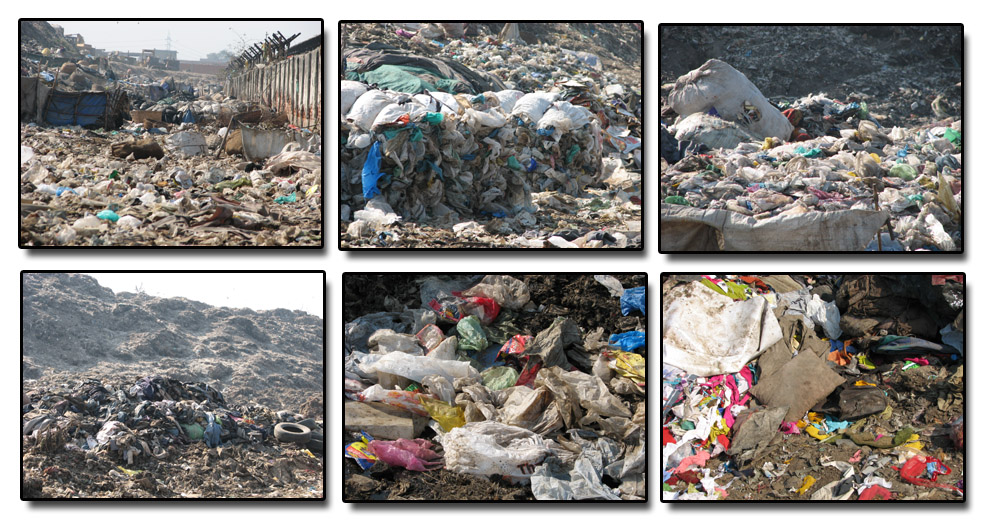
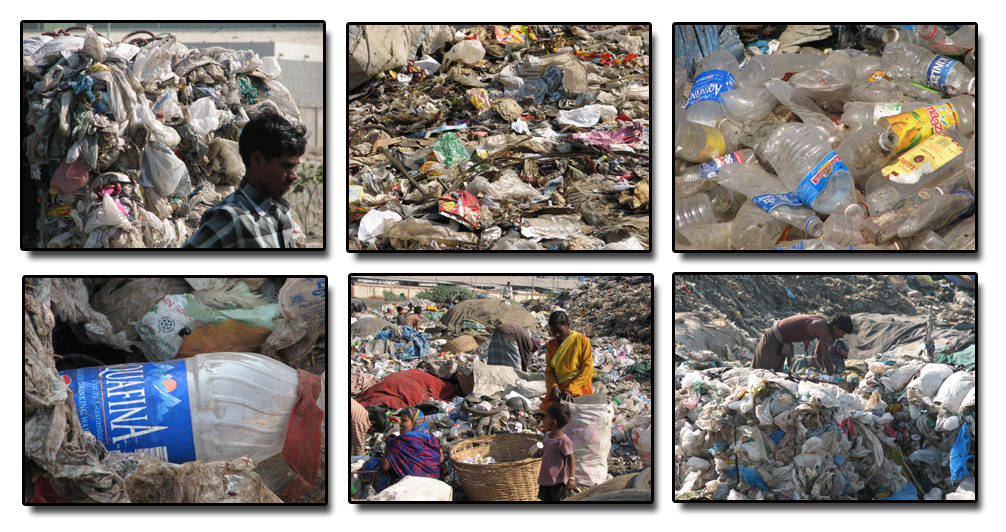
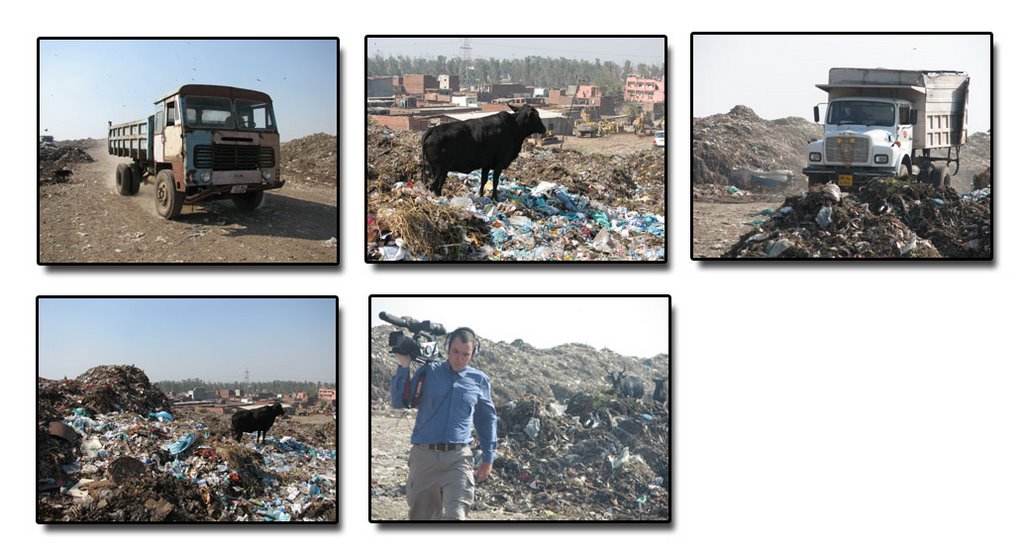
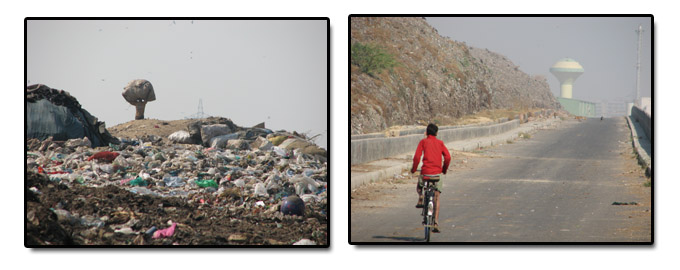
On the drive back into Delhi, Cryptic Moth spotted several large hills that, upon closer inspection, turned out to be landfills – dumps that largely consisted of plastic waste.


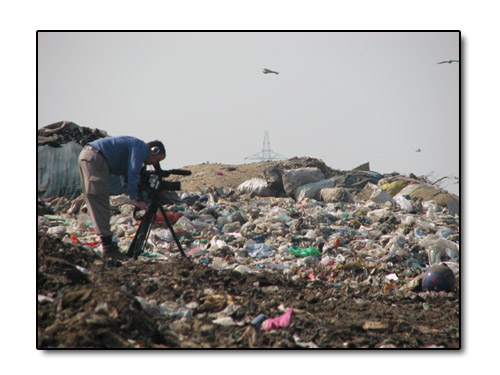
Thanks to Ashley, our kick-ass production coordinator, we would be one of the first film crews to actually climb these plastic mountains.


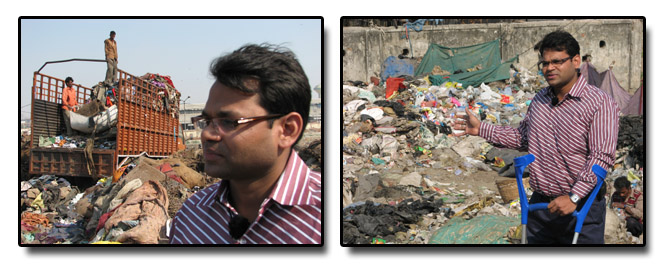
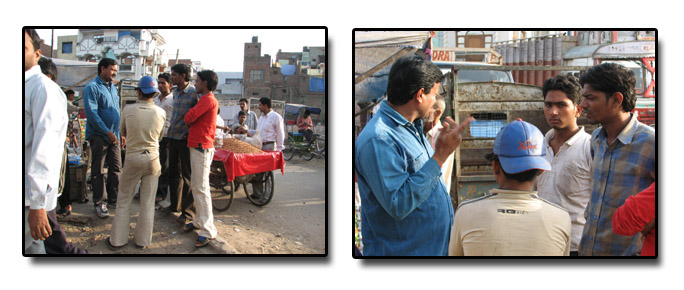
Parvinder works for Toxics Links (toxicslink.org), a local NGO committed to bringing awareness to everything from water quality to electronic waste.


Plastic is also on their radar and Parvinder agreed to show us recycling, India-style.


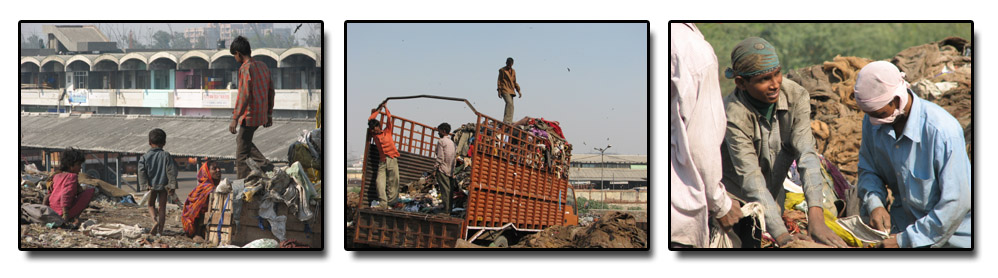
We chose a location on the backside of the landfill in order not to attract attention. We then hiked in a few hundred meters up the mountain where “ragpickers” as they are known actually live and work.


Different materials – like cloth, metal and plastic bags – are sorted by hand into large enough piles that are weighed and then sold as scrap for just a few rupees. The mixture of feces, rotting corpses, food waste and other garbage made our throats sting and eyes water.


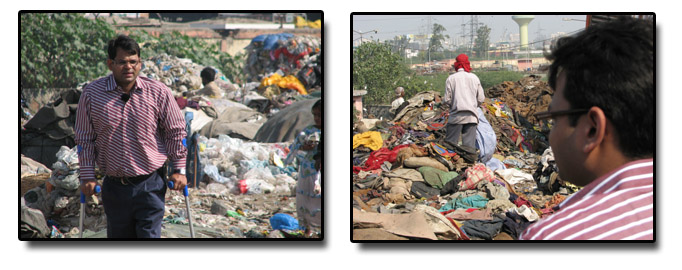
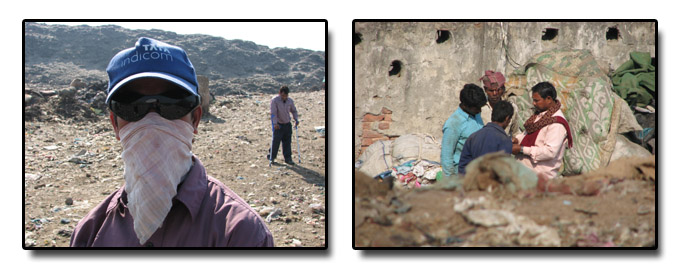
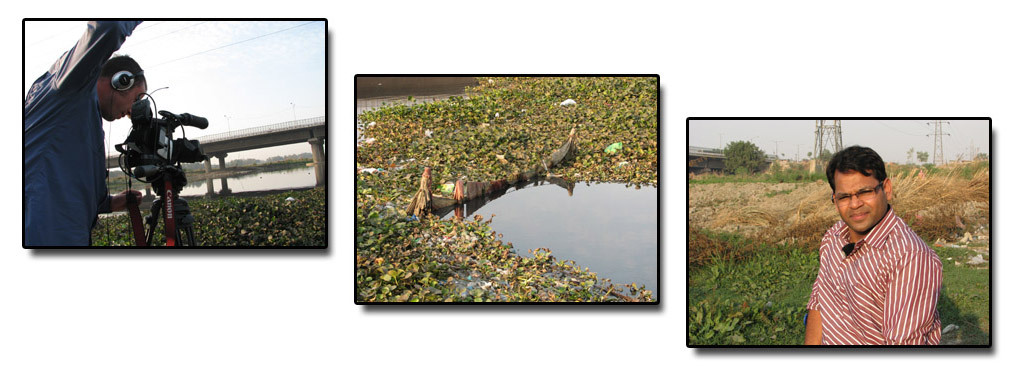
We interviewed Parvinder amid the devastation. He spoke eloquently about how “ragpicking” is an illegal profession in India but the system relies on these families to deal with the ever-increasing throwaway packaging. And while recovering these materials is necessary, the toxic working conditions make sites like this a crime.


And we felt it.


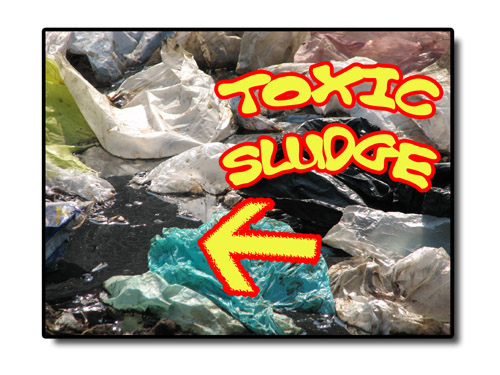
After filming some walk-and-talk broll with Parvinder, Gad started to notice small pools of toxic sludge with hatching insects. It was time to move on.


We drove around to the entrance of the landfill. Tewari weaved the car through a train of garbage trucks to about half way up the mountain. It was as far as he – and most of the crew – would go. Ian spent 20 minutes filming alone on the topside and those details will be saved for the film. Suffice it to say, this was the most testing Cryptic Moth shoot to date. And we were shaken.


Parvinder still had another location for us – an area outside Delhi where computer equipment; monitors and circuit boards are salvaged – by hand – for various parts and metals. After only 5 minutes of shooting, the crowd that had gathered forced us back to the car.


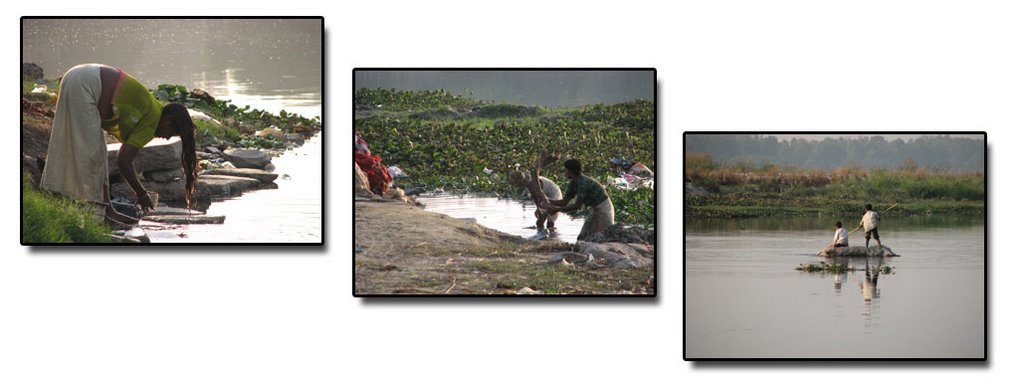
On the way home, we stopped on the banks of the Yamuna river – a heavily-polluted waterway where children were collecting trash from a plastic raft and a woman washed her hair.


According to Parvinder, most Hindus believe that rivers will take the litter away to God but somehow don’t realize how much it is accumulating. Just as he was explaining that, a car on the overpass threw a plastic bag of trash from the bridge that let out a great SPLOOSH when it hit the water.


After another interview in the setting sun, Cryptic Moth dropped Parvinder at his office and planned to meet for dinner later in the week. We can’t thank him enough for giving us an inside look into Delhi’s plastic pollution. The city is lucky to have him.