Thursday, February 8

From Toxics Alert


Mercury in healthcare: Clear and present danger

Thumbnail for the storyTwo recent studies have once again highlighted the clear and present risk of mercury exposure to medical staff and patients in the everyday healthcare settings. While one reinforces the global impact of mercury as a contaminant, the other shows its specific threat in the Indian context in terms of its impact on a wide social and professional group associated with such facilities.

Wednesday, February 7

India to demand international ban on mercury trade at UNEP meet in Nairobi

India's Toxics Link will join a large number of non-governmental organisations to call upon Governments across the globe to place a ban on mercury exports in a bid to check increasing mercury pollution at the 24th United Nations Environment Programme (UNEP) Governing Council meeting to be held from 5th to 9th February 2007.

India, which has no regulatory mechanism on mercury import, has emerged in the recent years as one the leading user of mercury thus contributing substantially to its increasing emission. There has been a growing shift of mercury demand towards the developing nations. One of the key demands to be raised at this meeting will be to urge the developed nations to provide new and additional funding towards mercury reduction in developing countries.

Ravi Agarwal, Director Toxics Link, the Delhi-based group that has pioneered research and advocacy on the issue of mercury hazard in India, will be at the meeting to lend a voice to an overwhelming opinion in the anti-mercury international community to call for adding more teeth to their efforts by enacting a globally binding instrument for control of use and supply of mercury.

He said that though the threat posed by mercury is global, as the heavy metal has the ability to travel widely across a number of environmental mediums, its health and environmental hazard locally, ranging from hospitals to schools, in day-to-day setting have been documented. India is also one of the largest importers of this deadly metal.

Two studies, highlighting the wide social group being exposed to this neurotoxin in a regular basis, were released last month. One by Toxics Link detailed presence of mercury in hospital indoor air exposing staff and patients, while the other by Health Care Without Harm, a global coalition of 443 organisations in 52 countries working to protect health by reducing pollution in the healthcare industry, found mercury in hair samples of volunteers, mostly women from 21 countries, including India.

"Governments must now agree on tough and binding rules to reduce mercury contamination," said Elena Lymberidi from the Zero Mercury coalition. "Mercury poisons the brain and threatens all of us and future generations, at both high and low levels. So this Governing Council Decision must have teeth to ensure global action."

In the five years, since UNEP's Global Mercury Assessment report, there has been no significant reduction in mercury use worldwide, according to its new mercury trade report. As mercury use has gone down in industrialised nations, developing countries have become increasingly reliant on this toxic metal. Air pollution experts also report that global mercury releases into the atmosphere have increased over the past 15 years.

"UNEP's Governing Council first identified mercury as a serious global threat over six years ago," said Michael Bender of the Mercury Policy Project. "It has since supported extensive research that all leads to one conclusion - serious, concerted global action must be taken immediately to reduce the level of mercury in the environment and protect fish as a viable world protein source."

Anti-mercury campaigners believe that the fundamental cause of failure over the past two years has been that governments have only supported voluntary 'partnership' programmes, instead of backing a meaningful, legally binding agreement, with the necessary financial assistance and explicit reduction goals. Advocates insist that global, binding agreements are the only way to curtail mercury's worldwide reach.

The NGOs recommend curtailing mercury's global reach by:

* Immediately working towards a globally-binding instrument on mercury using the UNEP trade reports' findings
* Reducing global mercury demand by setting a target to reduce it by 70 per cent by 2017, ending mercury use in electronics, button cell batteries, thermometers, and other non-electronic measuring equipment, phasing out the mercury-cell chlor-alkali process, and setting a sector-specific demand reduction goal to halve artisanal and small-scale gold mining by 2017, eliminating mercury use in whole ore processing, and other practicable measures
* Instructing UNEP to develop a global air emissions report for the next GC, to form the basis for setting goals to reduce major sources of airborne mercury emissions
* Reducing mercury supply by halting primary mining, except where mercury is a by-product from other ore processing, and restricting developed nation mercury exports and managing mercury from closing mercury cell chlor-alkali facilities
* Developed nations providing new and additional funding to support these activities in developing nations.

Mercury is a potent nerve poison and affects the brain and central nervous system. Workers exposed to mercury, eg. small-scale gold miners, often suffer from tremors, memory loss and other neurological damage. Those most at risk from methylmercury-contaminated food are babies and small children. The brains of babies in the uterus are the most vulnerable. The greatest risk is to young women, before or during pregnancy, eating fish containing high levels of methylmercury (e.g. shark, swordfish, king mackerel, and some types of tuna) or miners being exposed during gold mining.

From Toxics Alert

Breathing Asian nightmare

Thumbnail for the storyAsia's urban population is dying a slow death. The very economic growth that made the Asian developmental dream very real and palpable is now threatening to choke it as well, writes Parvinder Singh.


Documentary series to depict borderless humans and the environment in a global world at two-day festival in Delhi

As the global environmental crisis continues to capture more and more space in our everyday communication, films are emerging as a potent means of giving this concern a cross-cultural unity by highlighting commonalities that go beyond statistics of ecological degradation and rising sea levels and touch a chord at a more experiential level.

Toxics Link, Max Mueller Bhavan and ECOMOVE International have joined hands to bring to Delhiites some of the most outstanding international and Indian documentaries on the environment and struggles associated with it through a two-day film festival from 9th to 10th February 2007 at the Max Mueller Bhavan's Siddhartha Hall. These films strongly underline that events like global warming, climate change and natural disasters are not only on the rise but also require solutions beyond borders.

India with its rapidly growing economy is facing both the opportunities and risks of globalisation. On the one hand, for a limited section of society, wealth is growing, on the other, the social inequalities seem to be worsening. To counter environmental abuse and consequent inequities, it is paramount to act locally, while looking across borders to learn about common concerns and solutions.

ECOMOVE International is a network of international environmental film festivals. Its primary purpose is to promote environmental media -in particular the audio-visual. ECOMOVE works to improve the image and appreciation of environmental films, by increasing quality and quantity of media productions. It also conceives and implements educational and media projects on a national and international level. Michael Greif is project manager with ECOMOVE International. This series of films is supported by the German Ministry for the Environment.

On the opening day a panel discussion is scheduled on the topic 'Creativity versus Agenda in the Genre of Environmental Film Making'. Veteran documentary filmmaker Sanjay Kak will moderate it. Michael Greif, Down to Earth Managing Editor, Pradip Saha and Rahul Roy from Delhi Film Archives will be the participants.

Among other highlights are the Delhi premier of '100 per cent Cotton: Made in India' by Inge Altemeier. The film portrays the merchandise 'cotton' from its breeding and processing in India to its sale in the form of clothes in the industrialised countries – along with the grave consequences this involves for humans and the environment. From its polluted landscapes to its poisoned workers, India is paying a heavy price for Europe’s desire for cheap cotton.

SCHEDULE

9th February, Friday
* Inauguration at 1500 hrs
* Introduction by Michael Greif at 1515 hrs
* Premier Screening: 100% Cotton, Dir.: Inge Altemeier, Germany: 30 mins at 1530 hrs
* The many faces of madness, Dir.: Amar Kanwar, India: 19 mins at 1605 hrs
* PANEL DISCUSSION: Creativity versus agenda in the genre of environment film making-Michael Greif, Pradip Saha, Rahul Roy, Sanjay Kak at 1645 hrs

10th February, Saturday
* Drowned out, Dir.: Franny Armstrong, UK: 75 min at 1000 hrs
* Water business is good business, Dir.: Sanjay Barnela/Vasant Saberwal, India: 26 min at 1120 hrs
* Thirsty planet, Dir.: Henning Hesse/Martin Fensch, Germany: 30 mins at 1200 hrs
* Looking for Coal, Dir.: Gunnar Walter/Roland Wagner, Germany: 67 mins at 1315 hrs
* Ship breakers, Dir.: Michael. Kott, Canada: 72 mins at 1430 hrs
* Surplus - Terrorized into being consumers, Dir.: Erik Gandini, Sweden: 52 mins at 1600 hrs
* Life running out of control, Dir.: Bertram Verhaag/Gabriele Kröber, Germany: 58 at mins 1700 hrs
* Harvesting hunger, Dir.: Krishnendu Bose, India: 53 mins at 1800 hrs
* Bullshit, Dir.: Pea Holmquist/Suzanne Khardalian, Sweden: 58 mins at 1900 hrs

Contact: Parvinder Singh, +91-9811703798, T: +91-(0) 11-24320711, 24328006 or Mary Therese, +91 9818068589, T: +91-(0) 11-23329506, 23329890

Saturday, February 3

Greenpeace warns deluge of E-waste with Vista

The international environmentalist group Greenpeace Saturday warned of a potential deluge of electronic waste or "E-waste" as companies and individual users replace their computers to achieve compatibility with Microsoft's new Vista operating system.

"With Vista, Microsoft could effectively hasten the obsolescence of half the world's PCs, especially in the absence of fully-functioning global take back systems for PCs," Greenpeace Southeast Asia Toxics Campaigner Beau Baconguis said in a statement.

"Companies will feel the need to upgrade more computers sooner -and when they do, the world is unfortunately not prepared for the massive E-waste the upgrades will generate," Baconguis said.

Greenpeace cited a study conducted by U.S. technology marketer SoftChoice Corporation of inventory data representing 112,000 PCs from more than 472 organizations, which showed that "50 percent of the PCs are below Windows Vista's basic system requirements" and "94 percent are not ready for Windows Vista Premium edition."

"We maintain that the useful lives of existing electronic and computer equipment should be prolonged as much as possible," Baconguis said.

"In the end, this is about social responsibility. The idea that software innovation would result in more mountains of computer scrap ending up in the dumps of Asia and Africa, contaminating the environment, and affecting the health of communities, is both offensive and intolerable," she added.

Monday, January 29

We can leapfrog to the future without pollution and congestion: Anumita Roychowdhury

By: Parvinder Singh, Source: Toxics Link, Date: January 06, 2007

CSE recently came out with a study claiming that Delhi's pollution levels have turned critical this winter, could you shed light on this?

picture of Anumita RoychawhoryEven without looking at the air pollution figures we know from the darkened skyline that Delhi’s air quality gains will be lost this winter. Dry air has begun to get heavy with dust, smoke and particles. Calm and cool weather is blocking the dispersal of smoke and pollutants. Low-hanging shroud impairs visibility, chokes lungs.

Our analysis of the official air pollution data shows that the particulate pollution, which is considered the most serious vis-a-vis health, had stabilised after dropping by more than 24 per cent from the 1996 levels, is threatening to rise again. Even in winters when build up of pollution is highest compared to any other part of the year -- there had been a consistent decline since 1999. This too is scaling up. Winter is a seasonal statement of the growing pollution crisis, a cyclical reminder of our inability to put into action the real solutions.

Should we be alarmed? Why only this winter? Does this mean the historic conversion to CNG has failed suddenly?

We are very concerned. The real problem of an exponential increase in the number of vehicles, particularly the diesel variants, not only remains, but continues to grow. Between 1996 and 2006, personal vehicle registrations have risen by a staggering 105 per cent. Car registrations saw an aggressive climb of 157 per cent. Diesel car have increased by a shocking 425 percent in this period. This can only have devastating impact for a city already desperate for solutions to control smoke, particulates and NOx.

Delhi phased out 12,000 diesel buses to escape from the lethal effect of toxic diesel particles. However diesel, and its polluting fumes, is making a comeback through personal transport, threatening to nullify the air quality gains made in the past years. According to a very conservative estimate, the particulate emissions from the diesel cars in Delhi equals that from nearly 30,000 diesel buses. The benefits of the CNG switch and other measures including improvement in vehicle technology and fuel quality will be lost if the vehicle numbers are not controlled.

You have been at the fore-front of the decade-and-half clean air campaign that has made air-pollution a important issue in public perception. Can share with our readers how has the nature of pollutants changed over the recent years?

We are noticing significant shifts in air quality trends in Delhi. Among the key pollutants that are routinely monitored by the Central Pollution Control Board (CPCB), particulates have continued to remain a grave cause for worry given their very high levels despite stabilistaion. But sulphur dioxide levels have dropped much below the permissible levels largely due to coal substitution by the industries and lowering of sulphur levels in the transport fuels.

But lower SO2 levels should be interpreted with caution as much of this primary pollutant may also convert into sulphate particles through atmospheric transformation that are more deadly. Dramatic reduction in carbon monoxide despite the growing number of petrol cars in the city is a success story. But the major cause of worry today is the rising NOx levels, which is not only very harmful as a primary pollutant, but also aids in formation of yet another very harmful pollutant -- ozone. This trend here is consistent with global experience. All pollution control measures that have targeted to reduce CO, hydrocarbons and particulates have increased NOx as a deadly trade off. This is a challenge for the future. Indian cities will have to design control strategies that will help to resolve the trade offs.

Can you briefly share with us the shortcoming of the current emission standards, particularly with regards to diesel vehicles?

Diesel engine presents a very special engineering challenge in reducing both particulate matter and NOx emissions, simultaneously and significantly. The available engineering solutions to reduce particulates increases NOx. Due to these limitations of diesel engine, emissions regulations worldwide traditionally have allowed diesel vehicles to emit more NOx and particulate matter in comparison to petrol vehicles. Under the Euro-III emissions standards currently in force in Delhi, diesel cars are legally allowed to emit three times more NOx than petrol cars. This means adding one diesel car to the fleet on the road is equal to adding three petrol cars. At a global level the new emissions regulations in the US and California have addressed this problem by setting one of the most stringent fuel neutral standards for all vehicles, irrespective of the fuels they run on. This has severely reduced diesel cars in the US market. Only significant technology development would allow diesel cars to live up to the US norms.

Is it high time to nail the issue of private transport vehicles?

The biggest challenge that confronts Delhi and other Indian cities -- is how to overcome the intractable problem of automobile dependence. Vehicle numbers continue to grow, leading to congestion, pollution and unsafe roads. This is symptomatic of the mobility crisis that has resulted from wrong policies that have made the cost of owning and driving vehicles abysmally low and at the same time ignored to build public transport strategies.

In a statement of concern submitted to the Supreme Court a couple of years ago, we stated that the “breathing space” that Delhi gained, quite literally, because of the CNG programme can be lost if the future roadmap for pollution control in the city is not set immediately. There is need for consistent, sustained, and aggressive strategy to lower emissions from the fast burgeoning vehicle fleet in the city. The serious challenges that Delhi faces today include rapidly growing numbers of private vehicles, and increased pollution from slow and congested traffic. Inadequate public transport is leading to an increased dependence on private transport and distorted tax policy that taxes public transport at higher rates makes ownership and usage of private cars and two-wheelers attractive.

Urban planners must recognise that there are cities around the world which have demonstrated that with policies that restrain travel demand and use of personal vehicles, it is possible to reverse automobile dependence. Congestion pricing, parking levers, and land-use changes, are among the wide range of strategies available that can reduce car use.

An important way to slow down the growth in car numbers is to make a car pay for the full costs of the ecological and social damages. But the existing policies in Delhi and other Indian cities actually allow a hidden subsidy to cars as the costs of using up urban space for parking and roads, health damage, pollution, other social impacts are not recovered through taxes and road pricing. Reversal of such policies has already begun in Europe and other regions of the world. Asia’s own legend, Singapore, has shown how beginning early with traffic restraint measures, even before the mass transit systems are in place, can effectively cap the car boom. These measures have shown results. Traffic volumes have reduced. India cannot afford to delay these decisions any more.

In the end of the last year, mid-December 2006, an important inter-governmental meet brought together largest ever Asian gathering on the issue at Yogakarta in Indonesia. What are the implications of this gathering? Was it just a talk-shop or more than that?

This was one of the largest gathering on clean air issues in Asia and presents an opportunity to mobilise information and knowledge, track progress in Asian cities and expose a large number of stakeholders to the state of the science, debate, common problems and challenges pertaining to the issue. Whether such efforts -- not only this event or many other such forums -- represent opportunities or degenerate to talk shops will largely depend on the ability of the cities to translate science and information into real action and develop their own systems to benchmark progress. These forums should bring out good science on pollution control and management, draw attention to public health impacts, lay stress on the importance of preventive action and leapfrog strategy to go beyond the problem.

Do you see the issue of trans-boundary air pollution becoming a concern for the region's policymakers in the coming years?

Discussions have already begun on these issues in the Asian region and is likely to draw more political attention in the near future as individual countries begin to come under intense pressure to clean up their air.

Finally, the Asian economic boom has not really allowed consistent measures to address the issue of air pollution as the countries are too busy capitalising on the gains. Do you feel the exponential rise in air-pollution and its related health implications dampen the investment environment here?

Unfortunately, we do not organise studies in India to assess the impact of air pollution on our economy. It is a vital instrument of governance in other countries. Even in Asia, Hong Kong for instance, despite having cleaner air than the major Indian cities has begun to experience negative impact of pollution on business. A growing number of foreign executives -- and even some companies -- are leaving the city, citing the air pollution as the reason. Some companies worry pollution could cost the city its competitive edge. A recent survey of American business leaders in the region, found that 79 per cent of executives felt environmental issues are making Hong Kong less attractive to foreign companies. In India, such organised efforts have not been made to asses these dimensions of the problem. But we must be pre-warned about such sporadic instances. For rxample the way international sport events have got affected by high pollution levels. You may recall how the cricket test match in Kanpur was called-off because of smog in 2004.

Would like to share anything on the issue with our readers?

We believe it is possible to bring about change -- we can leapfrog to the future without pollution and congestion, if we can push for new technology and mobility paradigm. The seriousness of the problem requires quantum leap. It is more cost effective to leapfrog than to space out action incrementally over an inordinately long time frame. Solutions exist. We need to enable them. We have learnt from our experience and I am convinced that change is possible if there is strong public demand for clean air in our cities.

Thursday, January 18

Accident at Jadugoda

Accident at Jadugoda

Demand Full Investigation and RemediationBurst pipe

On December 24, 2006, one of the pipes carrying radioactive wastes from the uranium mill to a storage dam had burst, discharging highly toxic wastes into a nearby creek. When released into the environment in such a hazardous manner, the radioactive wastes are deadly to the people living in the surrounding area as well as their land and water.

The accident occurred in Dungridih – a small village near Jadugoda inhabited largely by displaced families whose lands were acquired to construct two of the three storage dams, also known as tailings ponds. The tailings ponds store all the radioactive wastes generated by the milling of uranium ore in Jadugoda. Based on the experience of similar accidents in other countries, however, the negative effects on human and environmental health will impact communities living downstream, perhaps even hundreds of kilometers away. Therefore, it is imperative that the Uranium Company of India Limited (UCIL) – the owner and operator of the uranium mine, mill, pipes, and tailing ponds in Jadugoda – immediately inform downstream communities of the disaster and prevent them from using the creek water until it is certifiably safe. Until the creek is safe to use, UCIL should supply water to the impacted communities so that they can continue their necessary activities such as bathing and washing clothes. Also, UCIL may need to provide compensation for families living downstream whose livelihoods depend upon the stream, a tributary to the Subarnarekha River, either for irrigation or fishing.

It is troubling that UCIL did not have its own alarm mechanism to alert the company in cases of such a disaster. Rather, the villagers that had arrived at the scene of the accident soon after the pipe burst informed the company of the toxic spill. Even more reprehensible is the fact that the toxic sludge spewed into creek for nine hours before the flow of the radioactive waste was shut off. Consequently, a thick layer of radioactive sludge along the surface of the creek killed scores of fish, frogs, and other riparian life.

According to reports in local Hindi newspapers, UCIL has begun repairing the pipe and removing sludge from the creek. This is an important step, but there must be a comprehensive remediation plan for cleaning up the affected sites in Jadugoda and elsewhere. Based on the experience of remediation efforts in the United States, Canada, and elsewhere, some of the major action items that must be included in the plan are to:

  1. thoroughly investigate the causes and impacts of the disaster, involving UCIL, appropriate state agencies, and representatives of local community organizations such as JOAR (Jharkhand Organization Against Radiation);
  2. compensate the people harmed by the radioactive waste that has been accidentally discharged into the environment;
  3. decontaminate the soil and streams that have been affected by the bursting of the pipe;
  4. create and establish inspection mechanisms and procedures to routinely monitor the quality and safety of UCIL’s equipment;
  5. regularly measure and monitor the exposure of workers and area residents to the radioactive and hazardous chemical contaminants that are generated by the mining and milling of uranium;
  6. create and establish emergency response programs in order to ensure the safe, effective, and timely response to possible disasters; and
  7. fully disclose to area residents UCIL’s progress in its clean-up of the disaster as well as reports of its inspections and monitoring programs.

Monday, January 15

Hindus defy pollution to bathe in Ganges festival

By Alistair Scrutton

ALLAHABAD, India, Jan 15 (Reuters) - Hindu holy men brandishing spears and tridents charged into the sacred Ganges on Monday, after threats to boycott the world's largest religious festival over pollution failed to dent devotees' fervour.

Wealthier Indians from politicians to high court judges have their own tent compounds with servants, Internet cafes and television.The ritual bathing kicked off the most auspicious day yet in the six-week Ardh Kumbh Mela, or Half Pitcher festival, where tens of millions of pilgrims gather to wash away their sins and free themselves from the earthly cycle of reincarnation.

Chanting battle cries to Lord Shiva, holy men dressed in saffron robes and other naked and ash-smeared "sadhus" ran into the river to the sound of drums for the first "Royal Bath" as dawn broke over the Ganges. "The water is dirtier than last time. It's like neglecting my mother.

This river is the source of all life," Naga Baba Triveni Puri, a naked holy man whose dreadlocked hair had not been cut in 18 years, said as he smoked cannabis after a dip. After thousands of holy men had threatened to boycott a festival that records show is more than 2,000 years old, authorities last week released fresh water from an upstream dam to clear up what many locals said was filthy and greenish water.

Industrial discharges, sewage, pesticides and the rotting remains of dead bodies have increased pollution levels in the Ganges over the years despite government promises to clean-up India's most sacred river.

WASHING AWAY SINS

Families from across India gathered well before dawn in Allahabad by the confluence of the Ganges, the Yamuna and a mythical third river, the Saraswati, to bathe and speed their way to the attainment of nirvana or the afterlife.

Thousands of pilgrims fought for space on the crowded, sloping river banks, many filling metal pots with the sacred water to take home for ill or dying relatives. Some 15,000 police stood guard and 50,000 officials kept control of crowds expected to top five million on Monday.

"Do not dispose of dead bodies in the river," warned one poster by the environment ministry. "The Ganges is so dirty -- how can you wash your hands in this?" proclaimed graffiti on an old fort overlooking the river. Indian holy man Hari Chaitanya had led a campaign to clean the Ganges and had taken his case to court. "It is not just water but divine nectar," Chaitanya told

Reuters late on Sunday in his temple grounds as followers came by to kiss his feet and make him offerings of fruit. For many of the millions that bathed, pollution was of little concern. "All I have is a hut and I live off alms. I'm tired but very happy," said Ram Iqbal Singh, a jobless and polio-ridden villager who hobbled on crutches for three hours to reach the river.

The festival is held roughly every three years in one of four sites, with the "Maha Kumbh Mela" festival or the Great Pitcher Festival held every 12 years in Allahabad. The last one in 2001 drew some 50 to 70 million pilgrims.

This year a tent city sprung up in the 4,000 acre (1,600 hectare) festival area to house pilgrims, with facilities from temporary railway ticket offices to missing peoples' departments for the thousands of people who get lost. Stalls selling statuettes of Hindu deities competed for customers. Many poor farmers dressed only in cotton slept in the bitter cold huddled up with families to keep warm. The city of Allahabad is one of four sacred spots where Garuda, the winged steed of Hindu god Vishnu, is said to have rested while battling demons over a pitcher of divine nectar of immortality. (Additional reporting by Sharat Pradhan)

Friday, January 5

It’s all about balance sheet

Darry d' Monte

Environmentalists are fond of applying Oscar Wilde’s definition of a cynic to an economist: someone who knows the price of everything, but the value of nothing. Though the two social sciences seem irreconcilably antagonistic towards each other, they both derive from the same Greek root, oikos, meaning household.

Freely interpreted, economics is the science of keeping the household accounts in order, while ecology is the science of ensuring that it is sufficiently stocked with goods. Economists, on their part, believe that ecologists are irredeemably unrealistic, while the practitioners of the ‘dismal science’ are derided for being ‘resource-illiterate’.

Unknown to most people, however, there is now a respectable body of science which attempts to reconcile the two fields. From December 15 to 18, the International Society of Ecological Economics met for its ninth bi-annual conference in Delhi. It was attended by some 800 participants, including 350 from India and 30 from China. As Joan Martinez-Alier from Catalonia, the outgoing President who has written prolifically about India, observed, it was something of a mela, with things to pick and choose, staples as well as some piquant fare — a bit hot for those unused to it — and some with medicinal value. The very fact that Amartya Sen agreed to deliver the concluding address demonstrates that it is a movement whose time has come.

Most conventional economics textbooks treat real-life situations as closed systems where the waste generated becomes a resource. Any digression from this diagram is put down to ‘externalities’ which can be accounted for and costs attributed to them. However, ecological economists see that there is a one-way flow from human activity to waste, whether in material form or as pollution. Thus, a single gold ring generates 20 tonnes of mining waste. On a much more alarming scale, the spectre of global warming threatens the very survival of the planet itself — externalities gone amuck.

The ecological branch does not view economic activity as a closed system but one which is embedded in physical and social systems. The natural environment has existed well before the human economy, but the converse is not possible. If the economic system is viewed as a metabolism, there are stocks (of fossil fuels, for example) as well as flows (renewable energy). Both stocks and flows are being depleted faster than they can be replaced. Wastes like carbon dioxide are also being generated faster than nature can cope with. Alier refers to extraction from the ‘commodity frontiers’: oil from the Niger Delta or Alaska; closer home, coal, bauxite and uranium from Bihar, Orissa and Jharkhand.

An ecological economist has cited how capitalism is an economy of unpaid costs, while others prefer ironically to characterise externalities not as market failures but "cost-shifting successes". The British economist WS Jevons warned as long ago as in 1865 that coal resources would run out. However, China and India, which constitute almost a third of the world’s population, will rely on this fossil fuel for their economic growth till the middle of this century, despite having to abide by the Kyoto protocol on greenhouse gases after 2012. Unlike conventional economics, the ecological variety squarely addresses the issue of the "carbon debt" – the fact that industrial countries have created global warming and ought to pay for these historical emissions.

There is also the concern that both China and India may be growing at extraordinary rates, but this does not necessarily mean that the benefits of growth are trickling down to the poor. The historian Ramachandra Guha, who has co-authored books with Alier, pointedly has titled his recent book, How Much should We Consume?, introducing a Gandhian rider to the current euphoria on the economic front. Economists tend to overlook the tricky questions of equity and distribution of resources; aggregates like GDP and per capita incomes camouflage such disparities, which is why there are more telling human development indices to measure the progress, or lack of it, of a country.

The contradictions that arise with conventional economics were vividly illustrated at the conference. Someone cited how Sir Nicholas Stern, the British economist (his academic field work was conducted in India) whose recent report on global warming has shaken many countries out of their apathy, believes that climate change is the biggest market failure of mankind. His prescription — countries currently need to spend 1per cent of their GDP to tackle climate change — typically does not address equity issues, even though Sen absolved him of such blame, stating that this was not his brief. By contrast, sustainable development requires inter-generational equity, so that in future people have access to the same resources.

However, "cost-shifting successes" were very much in evidence at a panel discussion on the Clean Development Mechanism (CDM), which are tradable rights which industrial countries or companies can buy from their counterparts in developing countries whose emissions are below limits. Pradipto Ghosh, the environment secretary, went so far as to claim that the foreign investment in clean technologies that India expected as a result of such trading amounted to $ 8 billion in 30 months, "an economic achievement unparalleled in the country’s history". He added that the Indian carbon market sector was growing faster than any other sector, including construction, IT and biotech.

The Centre for Science & Environment in Delhi has dubbed CDM the "Cheap" Development Mechanism because it enables industrial countries to buy their way out cheaply instead of paying the true economic costs of warming the globe. Developing countries are now selling their emissions permits for as low as $ 10 to $ 25 a tonne of carbon reduced, whereas in the years to come, after developing countries also come under the Kyoto Protocol, the cost of reducing a tonne will rise to $ 200 to $ 300.

The system makes no mention of compliance and penalties for those who have polluted the atmosphere in the first place and lets them off the hook. It is this operation of the market that is unprincipled and India and China, along with other developing countries, are in effect selling themselves cheaply in the bargain. It also provides industrial countries a huge market for their technologies when they launch joint projects.

Kenneth Boulding, the American economist who was one of the founding fathers of the ecological branch, warned that since economics was based on so many assumptions — about human behaviour as homo economicus — it was unwise to make predictions, which it does with abandon. In Delhi, speakers warned that economics, instead of being seen as a theoretical body of knowledge, has become an ideology; many concepts, like "development" are self-fulfilling. They called for inclusive and humane growth, shifting from "I rationality", which is the cornerstone of economics (Alfred Marshall’s shipwrecked islander who makes the right choices), to "We rationality", implying collective choices.

Ultimately, economics has to concede that not everything can be ascribed a cost ("the best things in life are free") and it has to make room for ethical values. Given the ascendancy of neo-liberalism, including in this country, this seems a difficult task to accomplish. A speaker called for embedding corporations within socio-political structures, based on social rationality, rather than profit.

When the first joint stock company was formed in Britain in 1564, it had unlimited liability; its reintroduction may rein in reckless growth, a la Enron. Corporations ought to be compelled to adopt social and environmental goals, as responsible and accountable entities. Their ownership should be more widely dispersed and the public exercise greater scrutiny. While this may sound anathema, such reforms are called for to ensure that growth is more sustainable and just.

Tuesday, December 19

Delhi winter turns gloomy!

Environment and Health Public Lecture Series

Delhi winter turns gloomy!

With the festival season getting over and feeling of chill in the air, Delhites wait for winter to set in for putting on colourful jackets and enjoy open-air picnic. This being the most pleasant season of the year, tourists flock in groups to explore the city. But for the people with respiratory problems, the time is not so welcoming – they feel quite apprehensive thinking of the smoggy wintry days ahead and worsening of their asthma.

During winter, the smog formed by the smoke and the particulate matters coming out from the industries and vehicles get blocked within the lower atmosphere and form a shroud over the entire city making the days look sad and gloomy. A recent study by Delhi based NGO, Centre for Science and Environment (CSE) reveals that pollution level of Delhi during winter months, which showed downward trends until 2003, has again started to climb. But do we have solution for it? Can Delhi again enjoy the delicate warmth of winter sun?

As Delhi heads for another smoky, pollution-heavy winter, Toxics Link is organising panel discussion on:

Delhi winter turns gloomy!

The eminent panelists for panel discussion:

  • Ms. Anumita Roychowdhury, Right to Clean Air Campaign, Centre for Science and Environment
  • Dr. B. Sengupta, Member Secretary, Central Pollution Control Board
  • Dr. S K Chhabra, Patel Chest Institute

Mr. Ravi Agarwal, Director Toxics Link, will moderate the discussion

Date: 19th December 2006, Tuesday

Time: 6.30 p.m.

Venue:

Conference Room 1, India International Centre, Lodhi Road, New Delhi
(In collaboration with India International Centre)

RSVP: Pragya Majumder T: 2432 0711, 2432 8006 e-mail: info@toxicslink.org

Monday, November 27

Mt. Plastic

By Cryptic moth


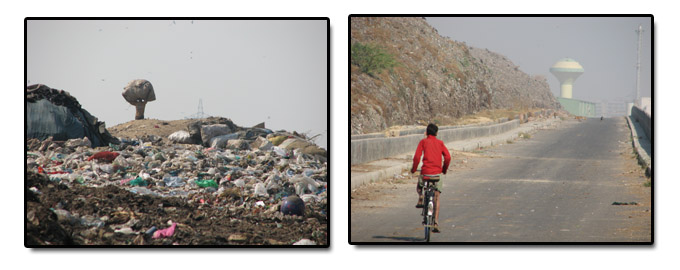
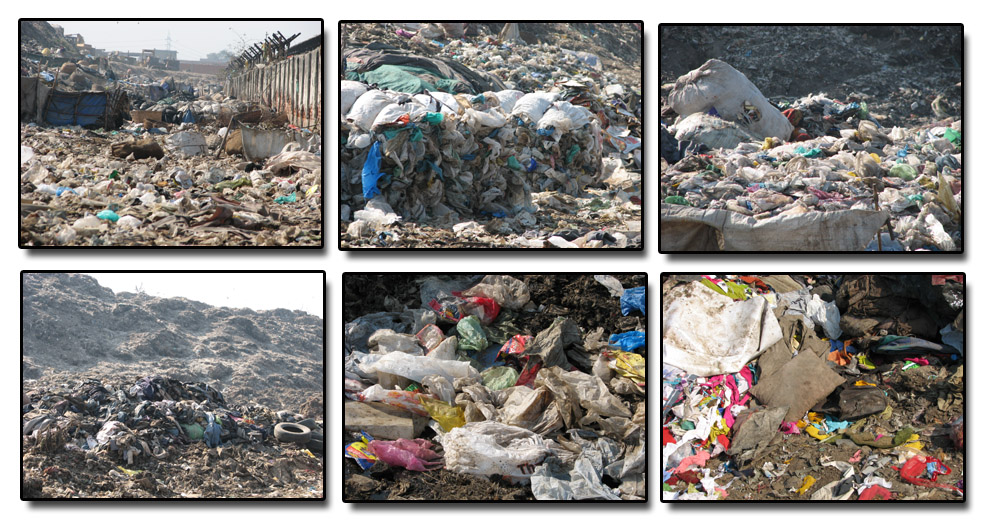
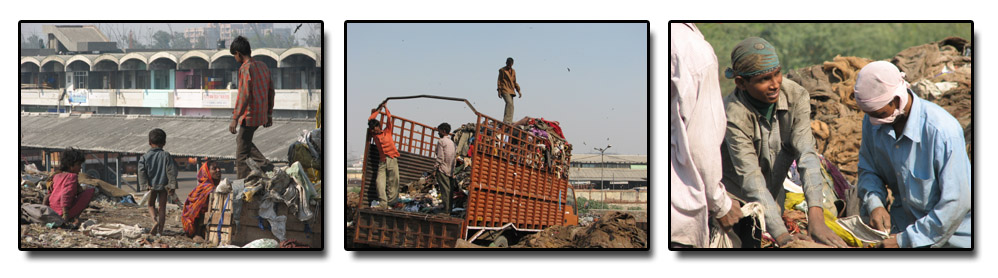
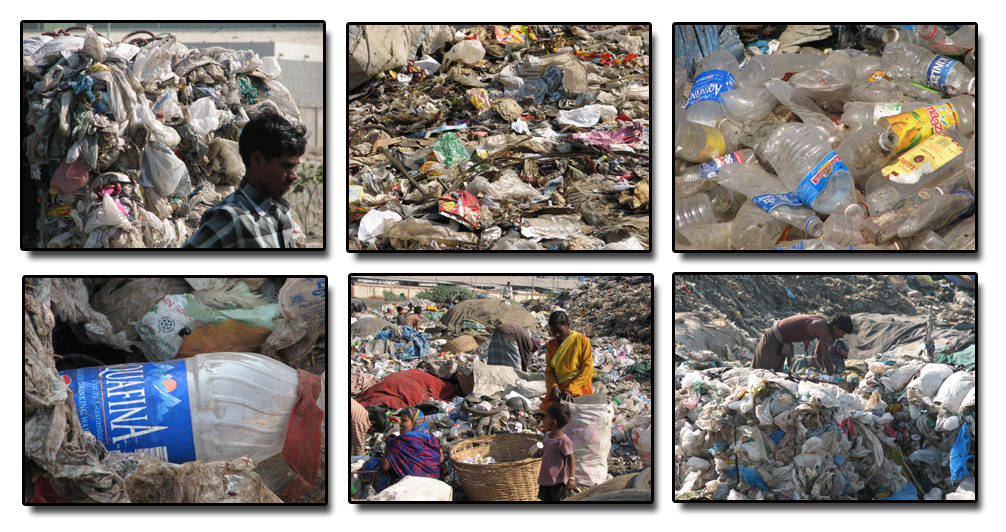
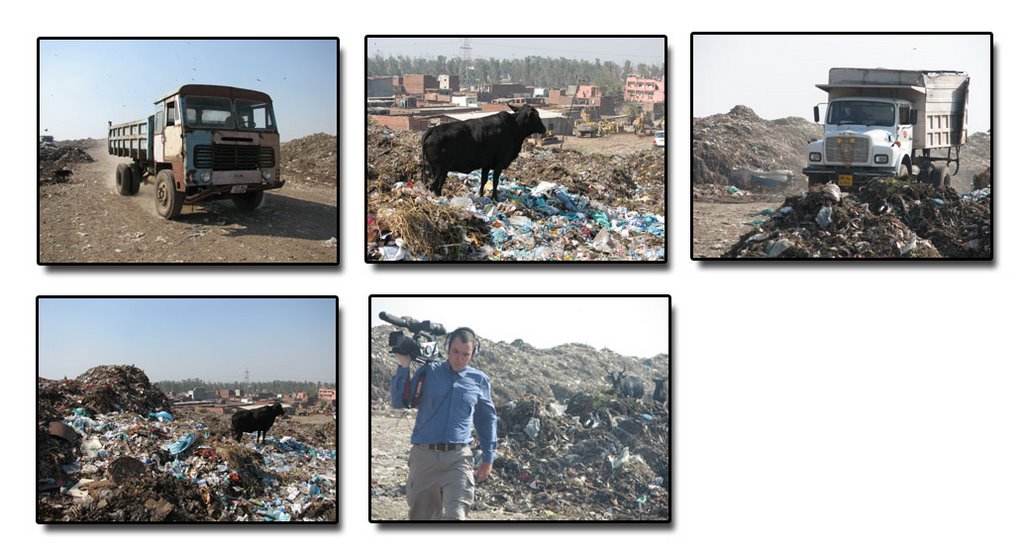
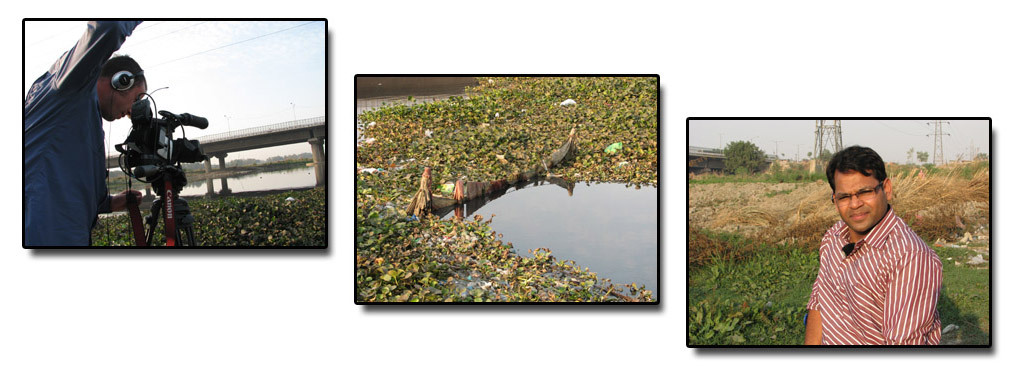
On the drive back into Delhi, Cryptic Moth spotted several large hills that, upon closer inspection, turned out to be landfills – dumps that largely consisted of plastic waste.


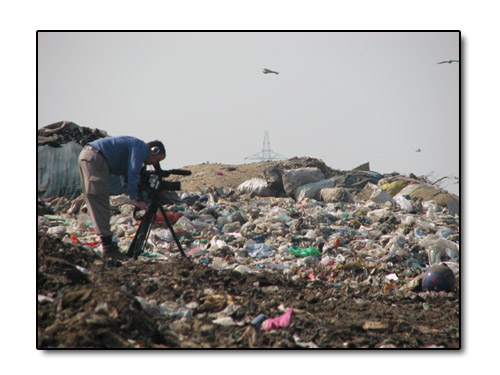
Thanks to Ashley, our kick-ass production coordinator, we would be one of the first film crews to actually climb these plastic mountains.


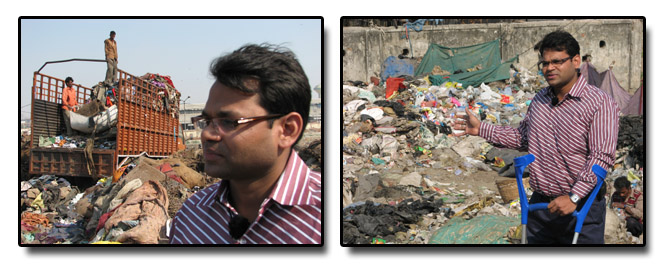
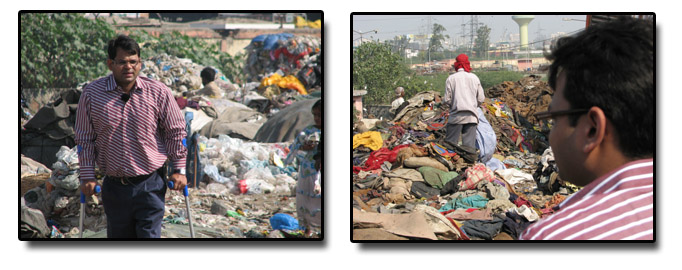
Parvinder works for Toxics Links (toxicslink.org), a local NGO committed to bringing awareness to everything from water quality to electronic waste.


Plastic is also on their radar and Parvinder agreed to show us recycling, India-style.


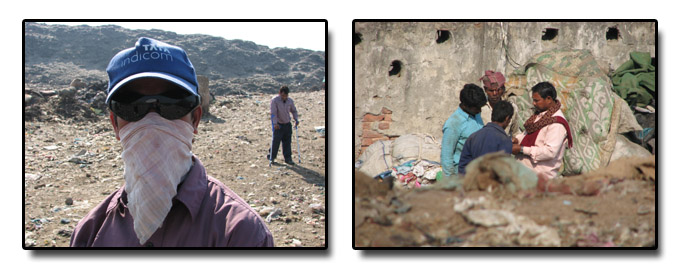
We chose a location on the backside of the landfill in order not to attract attention. We then hiked in a few hundred meters up the mountain where “ragpickers” as they are known actually live and work.


Different materials – like cloth, metal and plastic bags – are sorted by hand into large enough piles that are weighed and then sold as scrap for just a few rupees. The mixture of feces, rotting corpses, food waste and other garbage made our throats sting and eyes water.


We interviewed Parvinder amid the devastation. He spoke eloquently about how “ragpicking” is an illegal profession in India but the system relies on these families to deal with the ever-increasing throwaway packaging. And while recovering these materials is necessary, the toxic working conditions make sites like this a crime.


And we felt it.


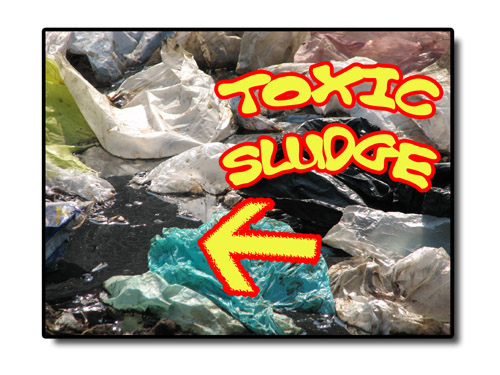
After filming some walk-and-talk broll with Parvinder, Gad started to notice small pools of toxic sludge with hatching insects. It was time to move on.


We drove around to the entrance of the landfill. Tewari weaved the car through a train of garbage trucks to about half way up the mountain. It was as far as he – and most of the crew – would go. Ian spent 20 minutes filming alone on the topside and those details will be saved for the film. Suffice it to say, this was the most testing Cryptic Moth shoot to date. And we were shaken.


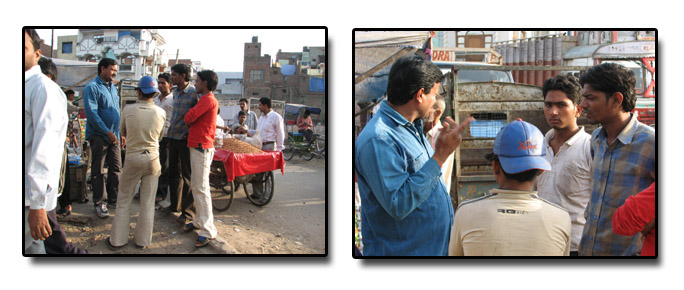
Parvinder still had another location for us – an area outside Delhi where computer equipment; monitors and circuit boards are salvaged – by hand – for various parts and metals. After only 5 minutes of shooting, the crowd that had gathered forced us back to the car.


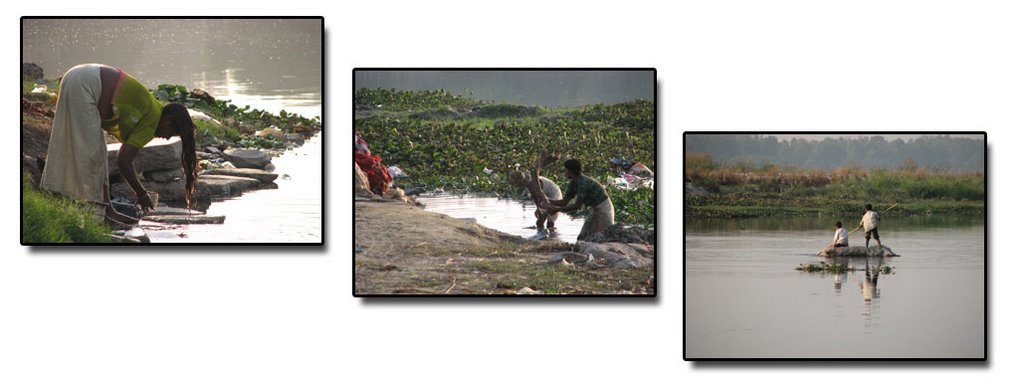
On the way home, we stopped on the banks of the Yamuna river – a heavily-polluted waterway where children were collecting trash from a plastic raft and a woman washed her hair.


According to Parvinder, most Hindus believe that rivers will take the litter away to God but somehow don’t realize how much it is accumulating. Just as he was explaining that, a car on the overpass threw a plastic bag of trash from the bridge that let out a great SPLOOSH when it hit the water.


After another interview in the setting sun, Cryptic Moth dropped Parvinder at his office and planned to meet for dinner later in the week. We can’t thank him enough for giving us an inside look into Delhi’s plastic pollution. The city is lucky to have him.

Saturday, November 18

Global HDR 2006 Urges Stronger Action on Sanitation

Source: UNDP

India is on its way to achieving the Millennium Development Goal on water, having made progress in enabling access to water to its rural and urban population. Access to sanitation is lagging and there is need to accelerate progress. This is stated in the Human Development Report (HDR) 2006.

The United Nations Development Programme (UNDP)-commissioned Report was released by the UNDP Resident Representative and UN Resident Coordinator in India, Dr. Maxine Olson, in the presence of the Union Minister for Water Resources, Prof. Saifuddin Soz, here today. The release coincides with the Global Launch of the Report in Cape Town, South Africa, by the UNDPAdministrator, Mr. Kemal Dervis.

Introducing the main messages of the Report, Dr. Olson said the Report traced the roots of crisis in the global water situation to poverty, inequality and unequal power relationships, as well as water management policies that exacerbate scarcity. “All these fall in the domain of human action and point to the key areas where countries including India need to focus their attention. Water has been treated as a limitless resource,” Dr. Olson said.

The UNDP Chief in India said the Report had powerfully resonated what experts know for some time now -- in parts of India groundwater tables are falling by more than 1 metre a year, jeopardizing future agricultural production.

“While water availability as delivered by nature is critical, equally important are policies, institutions and infrastructure through which people secure access to predictable flows of water”, she pointed out.

In the Keynote Address on the occasion, the Union Minister for Water Resources, Prof. Saifuddin Soz said by bringing out the HDR on the theme of water this year, UNDP had brought the issue to the centrestage and this would definitely help in drawing the attention of governments, policy makers, development practitioners and media around the world to the emerging water crisis.

Calling for increased and the right kind of investments in the water sector given its strong linkage with human development, economic growth and poverty reduction, Prof Soz said the challenge will be to invest in areas that not only augments supply and improves quality but also leads to greater equity and greater access to the poor.

“The present government is committed to bringing about improvement in this area as reflected in the Common Minimum Programme and the present 10th Five Year Plan. Prof Soz expressed the hope that the Government would be able to sharpen the focus in the 11 Five Year Plan on social inclusion and reducing disparities.

The Human Development Report 2006 argues that there is more than enough water in the world for domestic purposes, for agriculture and for industry. But the poor are getting systematically excluded from access to water by their poverty, limited legal rights and public policies that limit access to the infrastructure that provides water for life and for livelihoods.

The 1.8 million child deaths each year related to unclean water and poor sanitation dwarf the casualties associated with violent conflict. Yet the issue barely registers on the international agenda.

India receives mention in several sections like on how community action in water management has revived local economies. This has happened as a result of several grassroots leaders who have shown the way and led communities to manage resources, however scarce.

Drawing on these initiatives, the Government of India has framed policies that
enable and promote community management of water. There is scope for giving greater impetus to this movement and the Indian government is committed to this.

Citing experiences from Andhra Pradesh, Madhya Pradesh and Maharashtra, the Report says that equitable distribution of water and sanitation services is greatly enhanced when access and management rights are transferred to communities themselves.

Emphasizing the importance of community-government partnerships in clocking rapid progress in sanitation, the Report takes note of the work of the slum dwellers associations in South Asia – the National Slum Dwellers Federation in India and the Orangi Pilot Project in Pakistan to bring sanitation to millions of people, using the power of communities to mobilize resources. The Total Sanitation Campaign in Bangladesh has been scaled up to a national programme that is achieving rapid increases in access to sanitation. India is among the countries that have adopted the Bangladesh model.

The Report observes and cites the success of Midnapur district in West Bengal in scaling up sanitation from 5 per cent to near total coverage as a result of this campaign. The Report says that conflicts over water have been an exception and not the rule. It refers to the fact that more than 200 water treaties have been negotiated. Some of these treaties—such as the Indus Basin Treaty between India and Pakistan—have remained in operation even during armed conflict.

India has made some progress on the Human Development Index (HDI) value that has gone up from .602 in last year's Report to .611 in HDR 2006. On HDI ranking, India is ranked at 126 this year against a total of 177, going up one rank over the last year. India's rank on the Human Poverty Index (HPI-1) is 55 in a universe of 102 developing countries.

Download

Friday, November 17

Quotes from the Earth: on celluloid

Quotes from the Earth: on celluloid
Sucharita Sengupta, Source: terragreen

The average Indian cinema-viewing audience loathes to watch anything but regular Bollywood fare. So how does one get them interested in documentary films addressing serious issues such as the environment? This was the question that evoked deep introspection from all present at the three-day long (3–5 November 2006) environment film festival, Quotes from the Earth, organized by Toxics Link in New Delhi.

The festival showcased a number of films on the three broad themes of earth, water, and survival. The longest films ran for as long as 150 minutes, while the short films ran for just a minute. Yet, each carried a message that can be ignored only at the peril of mankind. Besides several Indian films, foreign films – from Serbia, Switzerland, Germany, South Africa, and the US – were also screened and were well appreciated.

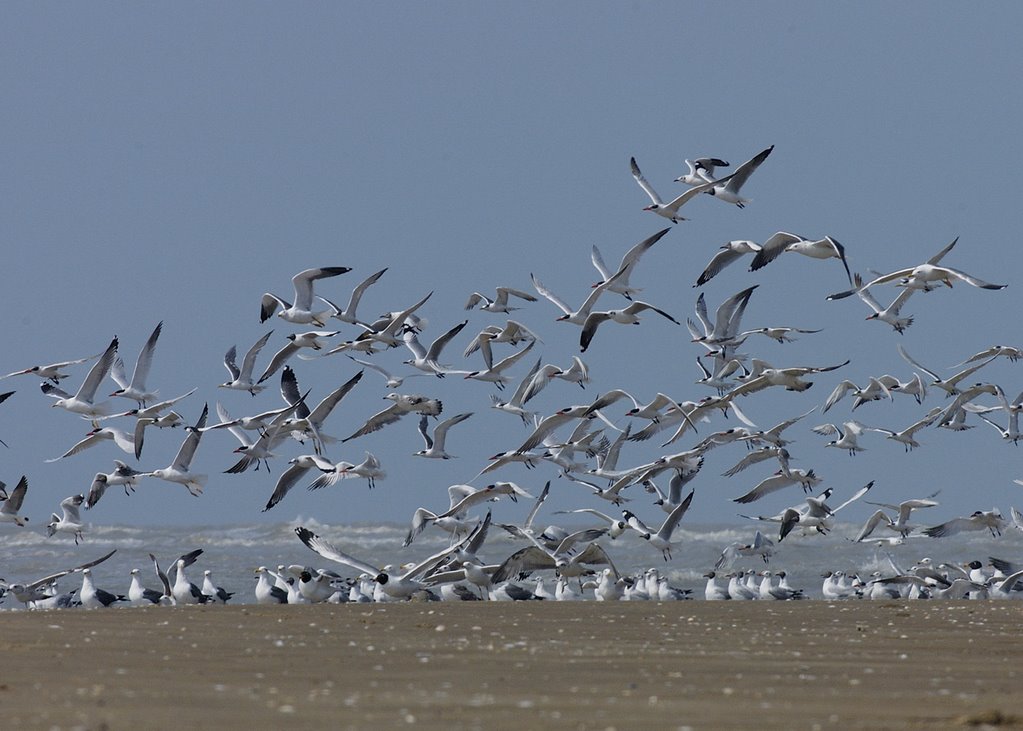
Point Calimere told the tale of a slowly degenerating migratory bird sanctuary situated on the Tamil Nadu coast. Only an Axe Away depicted the struggle of the people of Kerala against a dam proposed in the pristine Silent Valley. Other films documented the vanishing mangroves of the Sunderbans (A Green Agony); conservation plans in the Great Himalayan National Park (Turf Wars); the rare phenomenon of rain forests in Costa Rica (Mountains in the Mist); the story of recycling of car scraps by refugees in Belgrade (Pretty Dyana); and uranium toxicity near the nuclear test site in Nevada, the US (Downwind: depleted uranium weapons). Notable too were the award-winning film that predicted the devastating Uttarkashi earthquake (Call of the Bhagirathi) and traditional, successful water harvesting techniques in arid Rajasthan (Journey: traditional water harvesting). Two classic films were also screened at the event: Cheluvi, a bilingual by Girish Karnad based on a Kannada folk-tale and Ganashatru, by Satyajit Ray.

The film screenings were accompanied by a panel discussion on the topic ‘Are environmental documentaries only addressing the converted?’ Panelists included Pradeep Saha, Managing Editor of the magazine Down to Earth, Sanjay Kak, a filmmaker-activist, and Alec Wohlgroth, a Swiss filmmaker. The audience, which comprised of students, journalists, filmmakers, activists, and ordinary people concerned about the environment, participated enthusiastically. Although much was said, we present various arguments in a nutshell.

Those who saw essentially nothing wrong in showing environmental documentaries to the ‘converted’, emphasized that this small group is not insignificant. These are the people who can take the cause forward and create an impact. In fact, precisely because it is a fragile minority, it must be enlightened through films. Often, the converted themselves may not have full understanding of the complexities involved. Watching films may help them to engage with different issues.

The opposite view was that there is an acute need to drag environmental issues from the fringes to the centre of public attention. Earlier, environment was seen to be outside the purview of politics. However, matters related to waste or water are dealt with by municipalities, thus bringing them within the ambit of mainstream policy. The idea is not to get approval from the ‘converts’, or increase the number of environmentalists to whom the films reach. The films must be able to reach the politician, the policeman, or the bureaucrat, and get them to think differently.

The attention soon turned from the issue to the craft of filmmaking. Environmental documentaries are often accused of being ‘boring’ or similar in look and make. One view was that constraints of time, money, and specifications of funding agencies kill creativity. Also, making documentaries on the environment has become a safe bet, in terms of getting funds. Playing safe is the death of imagination. It reduces filmmaking to just another job and takes away passion.

However, there can be no excuse for bad art, or for that matter, poor social communication. A panelist pointed out that in general, social communication in India was poor. Environmental documentaries have followed the model of ‘Beginning ® Case Study ® Ending’. This model must be challenged and changed, and imaginative ideas infused into the craft. Perhaps one could use the tact of creating a thought provoking scenario to grab people’s attention.

Marketing and circulation turned out to be the major concerns. Besides making more interesting films it is important that they must also be widely circulated. Since environmental films have gained a relatively wider acceptance in the West, it is not difficult to circulate them or garner revenues. Films such as March of the Penguins or An Inconvenient Truth were testimony to this fact. But this continues to be a bottleneck in India. While some panelists suggested the development of a new business model, others said that films could be circulated via e-mail and Internet.

The audience raised several pertinent questions, including ones demanding solutions. Documentaries discuss matters but rarely come up with solutions. Perhaps filmmaker’s job is not to provide custom-made solutions, but only to provoke people into thinking. There were several voices of disagreement, demanding some kind of solution.

Lamenting inadequate research before making films, audience also highlighted the lack of channels devoted entirely to documentary film. Some suggested that these films should be beamed on slots reserved on private television channels. Filmmakers commented that one must be wary of making such a move, for several compromises will have to be made in the process, thereby deviating from the issue.

This engagement of filmmaker and audience comprising people from the India and abroad, all point to a space for ideas that is screaming to be filled. The festival must be taken beyond the posh walls of the India International Centre, to schools and colleges, and perhaps, homes. It would be a very ambitious, but a necessary step.

Wednesday, November 15

"Multi-Stakeholder Workshop on E-Waste Management"


Toxics Link is organising a "Multi-Stakeholder Workshop on E-Waste Management" on November 28, 2006 in Mumbai to bring on a common platform experts, professionals and policy makers to flesh-out new ideas to deal with the burgeoning problem of e-waste.

The workshop is being held in collaboration with Maharashtra Pollution Control Board (MPCB) and United Nations Environment Programme (UNEP) at Conference Room, 4th Floor, Yashwantrao Chavan Pratishthan, Nariman point, Mumbai.

E-waste is an emerging and critical waste issue in India, with cities like Delhi, Mumbai, Chennai and Bangalore contributing largely to the quantum of waste and also bearing the adverse impacts of it. Mumbai, the commercial capital of the country and thus headquarters for majority of the corporate offices, is one of the largest consumers of electronic goods. The rapid change in technology, high obsolescence rate of the electronics and also the imports of junk for sheer economic gains in port cities like Mumbai are challenges that need to be taken up on priority.

The workshop is expected to fulfill the need for exhaustive deliberations and exchange of information on e-waste management practises with specific focus on the Greater Mumbai region that is arguable emerging as the hub for e-waste in India.

PROGRAMME

TIME

SESSIONS

0930-1000

Registration

1000-1100

Inaugural Session


Welcome by Mr Satish Sinha, Toxics Link


Key note address by Dr Boralkar, Mem Secy, MPCB


Address by Chief Guest


Address by Bas de Leeuw, UNEP


Vote of Thanks, Toxics Link

1100- 1115

Tea Break


1115-1315

Session I: Chaired by


E-waste in India: A NGO Perspective, Dr Kishore Wankhade, Toxics Link


E waste Trends and Assessment in Mumbai: MPCB


Issues of E-waste in India: An IT Industry Perspective- Mr Vinnie Mehta, MAIT


End of Use Management by Corporate sector-


Question Answers/Discussion Session


1315-1400

Lunch

1400-1545

Session II: Chaired by


Existing Regulations on Imports and De-bonding: Customs, Mumbai


Existing Recycling Practices by Recycler: Mr BK Soni Info trek


Existing and Future Legislation for E-waste in India: CPCB


Inter-State of movement of e-waste and its challenges: MPCB


Question Answers/Discussion Session


1545-1600

Tea Break

1600-1700

Session III: Chaired by


EWA Initiative in Bangalore: Mr David Rochat, EMPA


A Model for e-waste management in India: Toxics Link


Break up in Small groups to discuss model


Discussion/comments/recommendation


Summing up: End of workshop

1700-1730

Press Briefing

Thursday, November 9

City of Joy's emergence as destination for e-waste!


By Priti Mahesh

Electronic waste seems to be increasing rapidly in the major cities like national capital Delhi and commercial capital Mumbai. A trip to Kolkata seems to suggest that other metros are catching with e-waste recycling emerging as a highly profitable pursuit for the traders. With over 11 million inhabitants, Kolkata is among one of the biggest cities of Asia.

In Kolkata, the technological boom has happened only after it peaked in Delhi, Mumbai, Bangalore and Chennai. Computerization has now invaded the City of Joy and so has the menace of e-waste. Government offices, banks, multinationals, private companies seem to be main source for this. Household contribution to e-waste stream is still minimal, 'Kolkatans' believe in using the product till the very end.

Most of the big companies (public and private) are disposing off their waste through official tenders (published in newspapers) or auctions. Some of them have though, in recent years, embraced the exchange policy wherein they return the old computers and get some discount on the new purchase. And in some cases, where the e-waste generation is small, the companies just dispose off their waste to the local ‘kabaddiwala’.

Where does all this waste land up?

A visit to the by lanes of Chandni Chowk throws some light to this question. Chandni Chowk is a busy commercial area in the very heart of the city. This stretch has all but lost its entire footpath to hawkers. The encroacher sell a variety of items, including second hand electronic goods (television, computers, music systems etc), mobile phones etc. One can find array of items in these temporary, unauthorised structures, from a monitor to a mouse, from a keyboard to a tiny capacitor. The hawkers get these old computers mainly from local companies. If you are interested in assembling a computer of your own- this is probably the best place, as you will find every part and being second hand- much cheaper than the original prices. One can get a DVD writer in 180-200 rupees with a little bargain! Many lab technicians, professors, hardware repair personnel also visit these areas to get electronic parts as per their requirement. The road has a large number of repair shops as well which probably uses some of the components available here and also adds waste in the market.

In midst of these streets, one can find people breaking different parts of computers to get the material they require- the rest is thrown in a nearby dustbin or dumped in the road! The seemingly illiterate hawkers and labourers do know about 286s, 386s and 486s versions being obsolete and break open these to get different materials, mainly metals like copper. The methods used are rudimentary and the people engaged in these activities seem completely oblivious of the ill effects of handling this hazardous variety of waste.

Many recycling plants are also mushrooming in the different parts of the city. Though the trade is rampant, nobody is ready to admit that they are part of this. Rajabazar, Kankurgachi, Phoolbagan are some of the areas where the unauthorised recycling is happening regularly. The waste, which is, recycled in Kolkata and the adjoining areas of Howrah are not just waste generated in the city but there also lot of waste coming from the other parts of the country. The usable parts are sold unit wise to the local traders and rest are dealt as scrap. The recycling units in Kolkata mainly extract valuable metals like gold platinum, copper and sell it the smelting plants. The remaining plastic and glass parts are sold further for extraction and recycling. There is also part of this waste that is going to places like Delhi, which is hub of recycling activities. The printed wire boards are normally bought by the Delhi traders and brought to areas like Shahadra for further processing.

According to a source, lot of PVC wire burning for copper extraction happens in these areas and also near the Ganges riverbank. The people involved in this work being aware of its harmful nature, the burning generally takes place in the evenings after sunset and bribes are paid to the local police to carry the illegal activities. These fumes are not only polluting the air but also the water body.

Though the state pollution board recognizes this growing problem, there has been hardly any activity or action from their side. According to an officer in the board, they have heard about the recycling units in and around the city, but they have failed in locating these. Can this be actually true when these units are burgeoning in the heart of the city?

Wednesday, November 8

Hundreds of chemicals could harm kids' developing brains

Environmental exposure from hundreds of industrial chemicals could be damaging the developing brains of children worldwide, but few of the potentially toxic compounds are regulated because too little is known about their effects, researchers say.

In a paper published on-line Wednesday in The Lancet; two specialists in environmental medicine (each of whom have spent decades studying the effects of lead and mercury exposure on the fetus and children) compiled a list of 201 industrial chemicals they say have the capacity to cause irreparable damage to the developing human brain.

Lead author Dr. Philippe Grandjean, chair of environmental medicine at the University of Southern Denmark, said he and co-author Dr. Philip Landrigan of New York's Mount Sinai School of Medicine both had similar experiences while studying the neurotoxicity of lead and mercury.

“First, things were seen in adults and later on, the disease was seen in children born to pregnant women or children exposed in early childhood at much lower doses,” Dr. Grandjean said Tuesday from Copenhagen. “Later on, it was found that these effects were more serious and they were permanent (in children).”

Monday, November 6

3 Screens Film Festival


3 Screens Film Festival is being presented by the Delhi Film Archives at the India Social Forum 2006. ISF is being organised from 10 to 13 November at the Jawaharlal Nehru Stadium Grounds, New Delhi.

The film festival will be held on 10,11 and 12 November. The screenings begin at 10 in the morning and continue till ten in the night. The festival presents 99 films in the following five Sections.

Director's Cut : ten Indian film makers show a film of their own and
a film of their choice

New Images : 35 new documentaries made in the last three years in India


Other Worlds are Breathing : 22 films shown at the WSF 2005 in Brazil

Working Lives : 22 international films on labour and globalisation

Open Slot : films registered with ISF through an open call.

We are sure you will enjoy watching films in Public Ka Multiplex! The schedule is attached. It can also be accessed from www.delhifilmarchive.org
Entry to the ISF is through delegate passes available at the entrance of ISF.

Where have all the sparrows gone? Wonders Delhi Chief Minister


'Quotes from the Earth' environment film festival inaugurated


"I haven’t seen a sparrow in a long time, though my garden has over 80 different kinds of birds." A concerned Delhi Chief Minister Shiela Dikshit said at the inauguration of ‘Quotes from the Earth’ environmental documentary film festival here Friday morning.

Taking time off from an intense political drama over the issue of sealing of shops in residential areas, she said: "I agreed to attend this opening ceremony because of the intense and personal concern that I have for environment."

Calling for all possible action ranging from individual acts to broad based community awareness on safeguarding environment, the Delhi Chief Minister said films are one of the most powerful mediums to take the issue to the masses.

Commending Toxics Link, the organisers, for holding the event she offered all possible financial and infrastructural support for taking the films showcased in the festival to people of the National Capital Territory region through projection vans.

She also used the platform to share with those present a school intervention programme being framed for conducting plantation drives in wastelands and denuded areas for increasing green cover in the capital.

Speaking about inter-linkages, so far as global nature of the issue of environment protection is concerned, Dr Dominique Dreyer, the Swiss Ambassador to India, said that though his country has largely protected its environment, one cannot deny the significance of supporting pro-environment activities in other societies.

Director of Toxics Link Ravi Agarwal detailed the dynamism that is visible in environmental debates and thus a need to create platforms for furthering the concerns that surround the issue.

The three-day film festival began on a high note with the inaugural screening of Shekhar Dattari's Point Calimere: A little kingdom by the Coast being appreciated not only with claps but also some heavy whistling by a young crowd.

The event that saw the most animated exchange of ideas among those present was a panel discussion on “Are environment documentaries only addressing the converted?” The panelists included acclaimed documentary filmmaker Sanjay Kak, Swiss director Alec Wohlgroth and Pradip Saha from Down to Earth.

The debate encompassed issues ranging from decline in creative standards to need for breaking away from agenda-based funding; from the new technological developments allowing greater freedom to need for cultivating new audiences.

http://www.toxicslink.org/filmfestival/2006/docs/Quotes_from_Earth_2006_Brochure.pdf